czech embroidery - art that keeps you warm
Something I've been meaning to post for quite some time now is the fruits of a 2024 visit to the National Museum in Prague. The thing that I most wanted to see in the Czech Republic was traditional embroidered clothing looks like, and the Ethnographic Museum was able to satisfy my curiosity.
Every single stitch of embroidery on these pieces was made by hand. This was really the art form of the day, this was how Czech women of the nineteenth century would express their artistic impulses.
You would always have an audience, your work would be seen by your whole community. Clothing would be seen by everyone your family interacted with; linens would be seen by not only your family but anyone who came to your house to dine with you. These items would be treasured for generations. There's something really cool about that, about art that becomes part of the living fabric of a household and a family. Just like a woolen winter coat, this is art that keeps you warm.
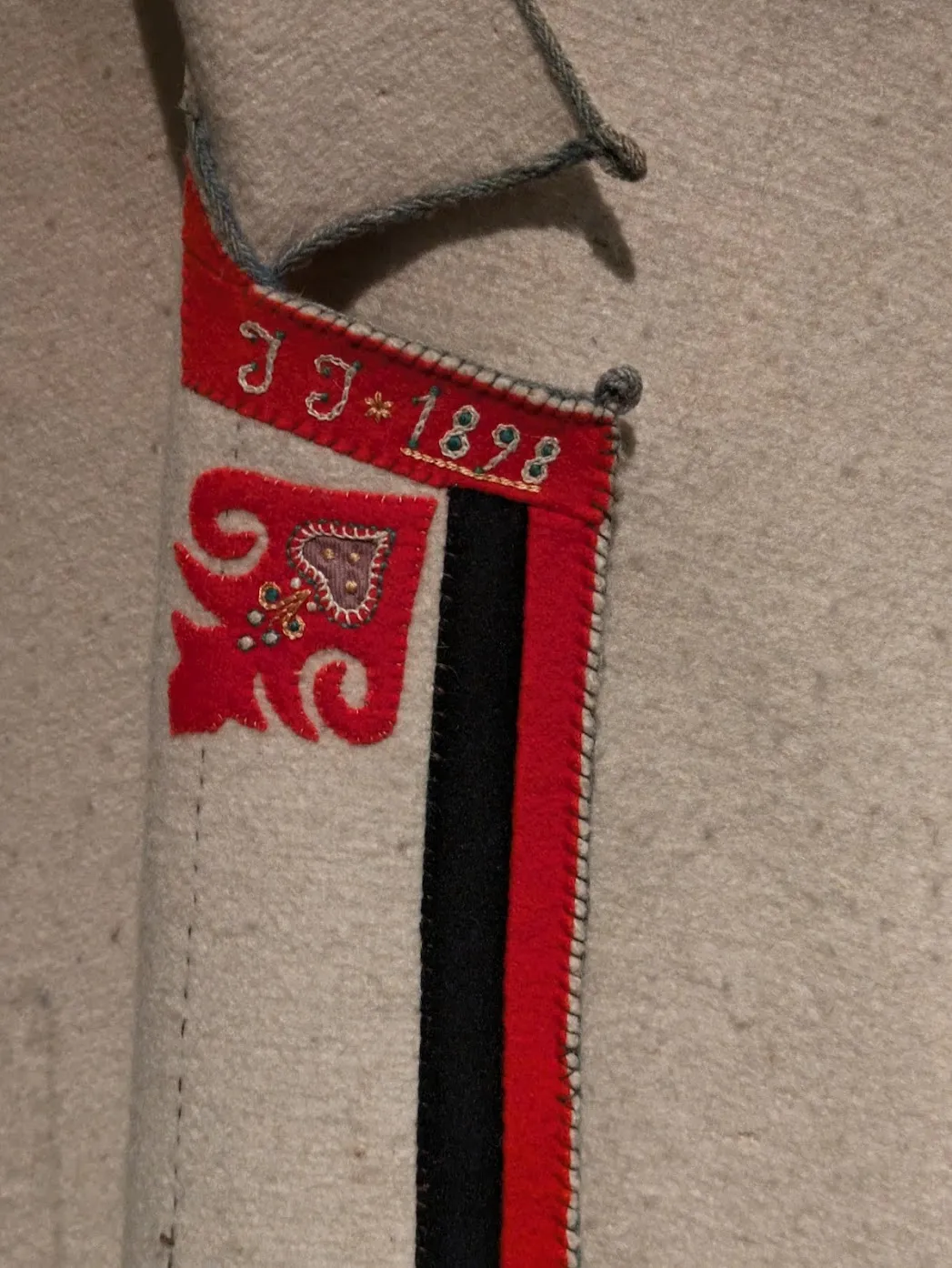
Detail of the lapel of a wool coat made in 1898.
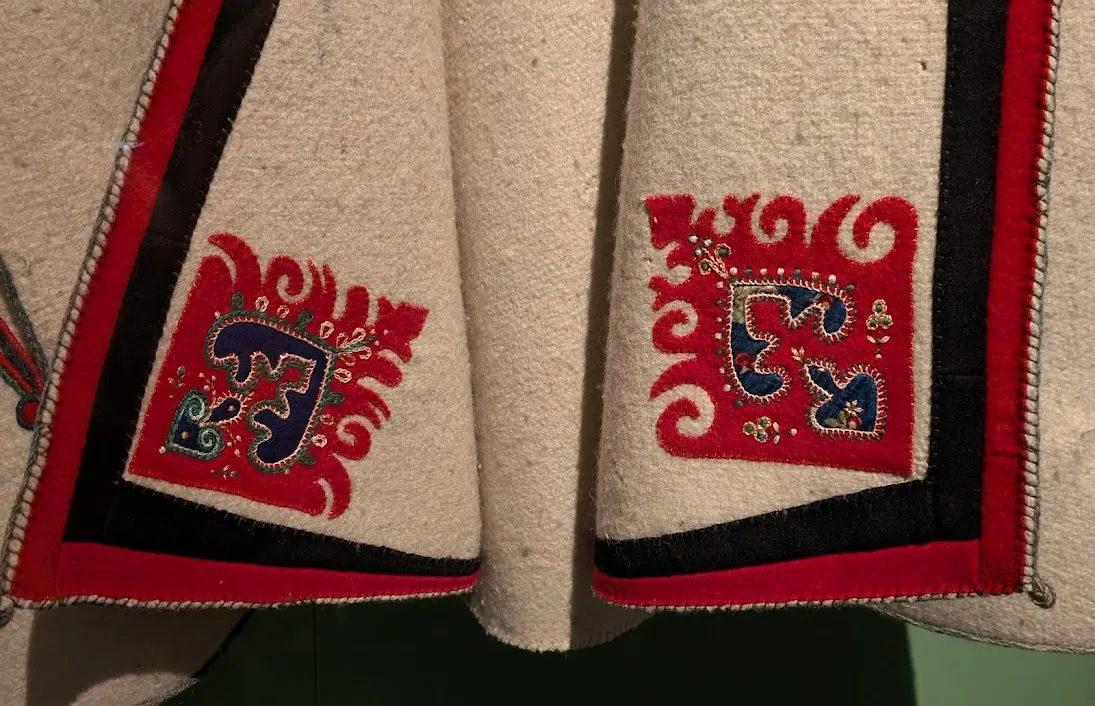
Detail of the same wool coat. These are also part of the lapels, the coat is meant to be worn open. Note how incredibly intricate the embroidery is, making use of blanket stitch (in white), chain stitch (for the yellow flowers), and satin stitch (filling in the blue areas.) I really love this design and want to do something similar.
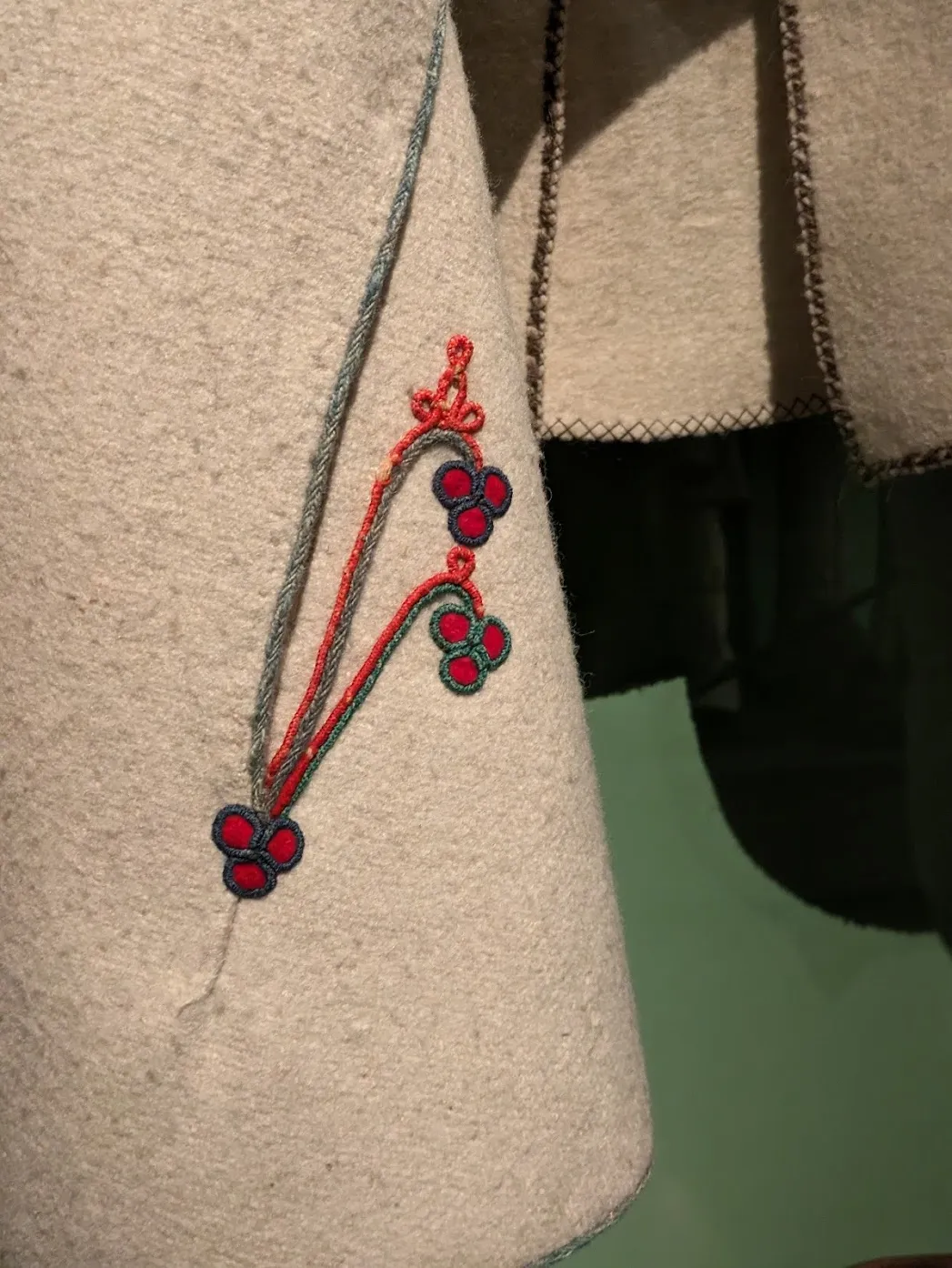
Detail of the waist of the same wool coat. Only because the coat has sustained slight damage over the past 1.25 centuries can we see how this was made. It looks like the artist laid a piece of yellow cord along the fabric and sewed it in place with minute red stitches, covering it completely. Or perhaps the red thread was wound around the cord prior to being sewed on, which would require fewer stitches?
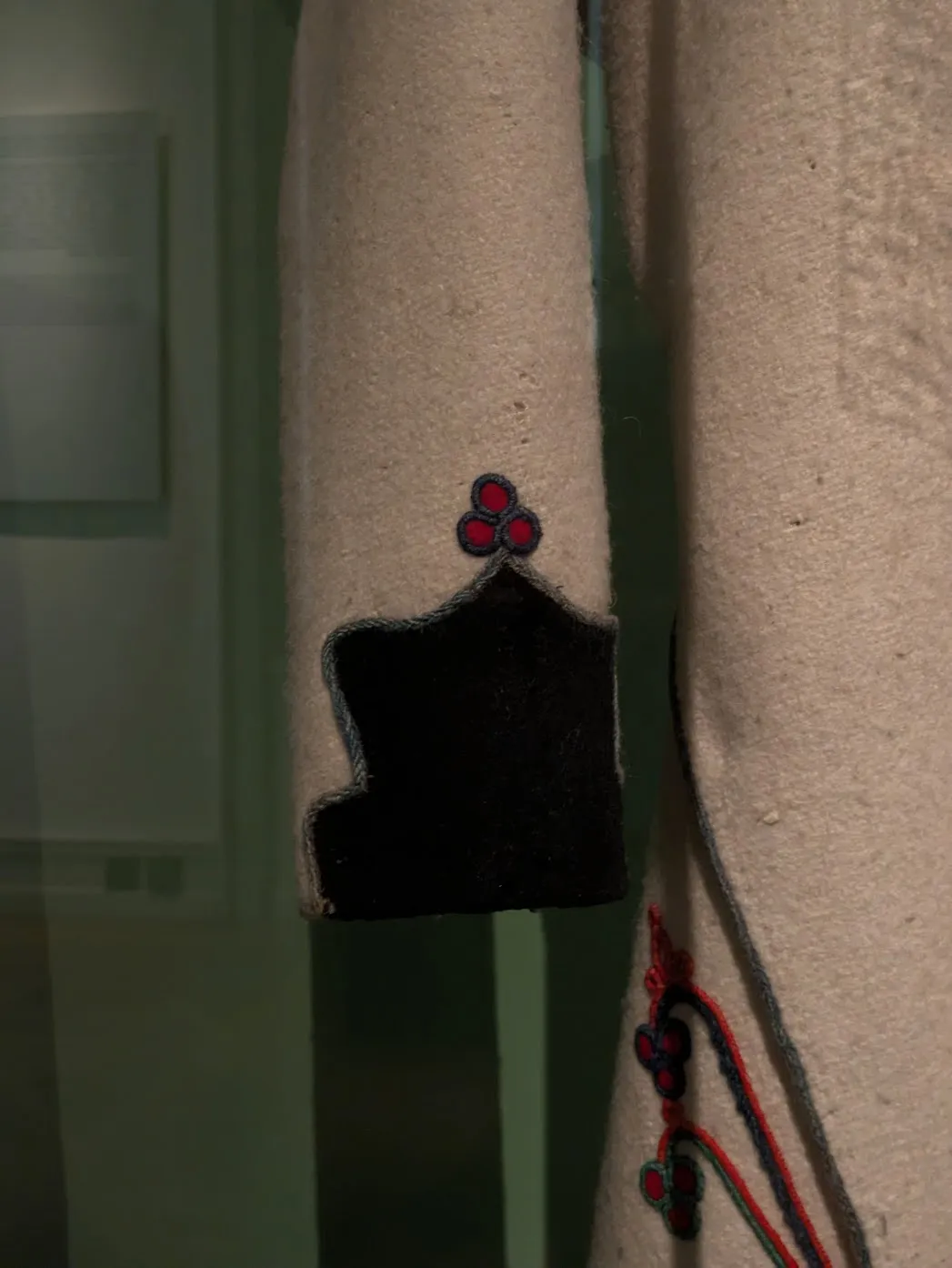
Last detail of this same garment. I like how unexpected the shape they chose for the sleeve is, it reminds me of a cowhide.
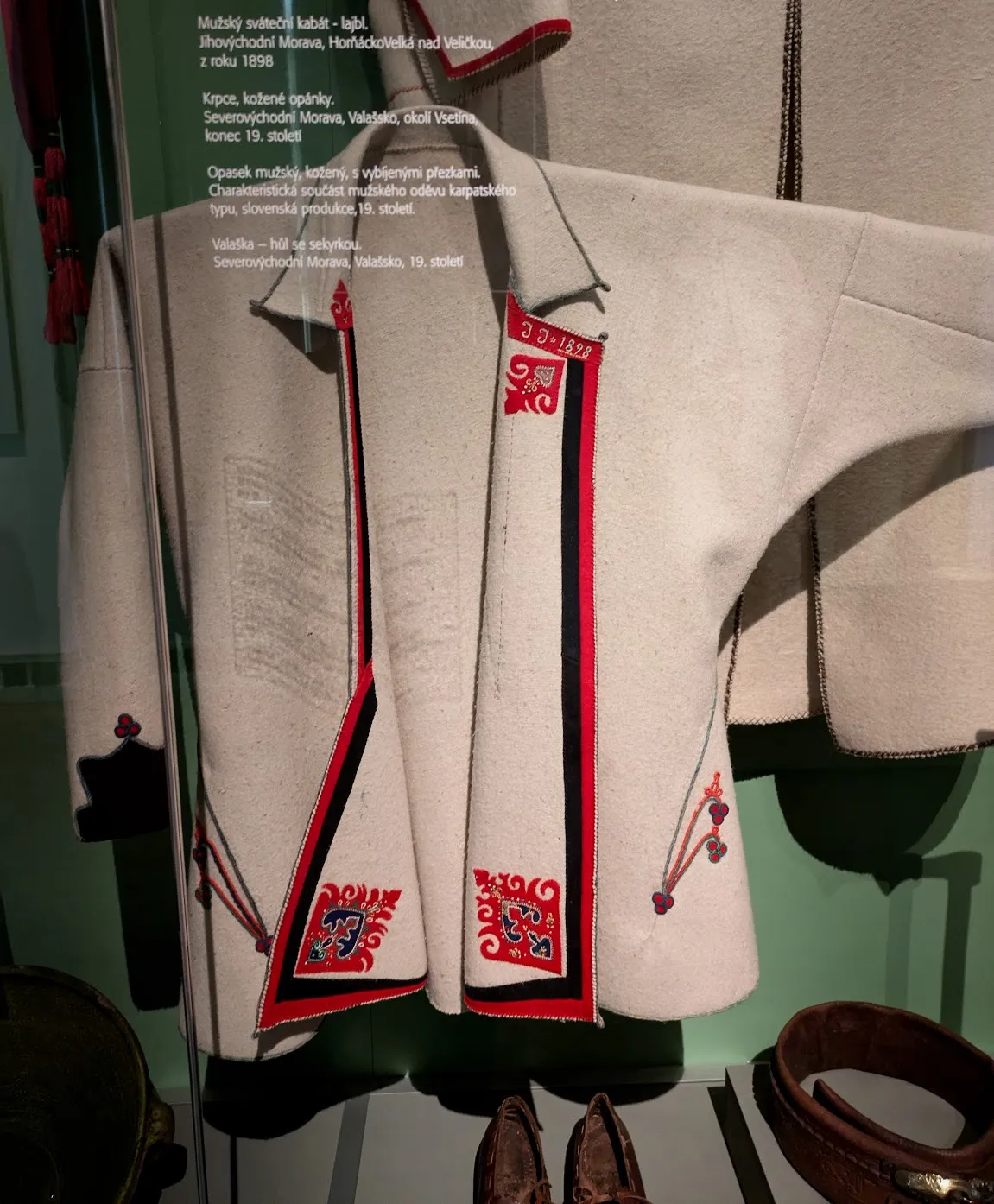
The coat in its entirety. (Let's pretend this is a better photo, it's very hard to take pictures of something behind glass without having reflections of lights completely obscure what it is you're trying to photograph.)
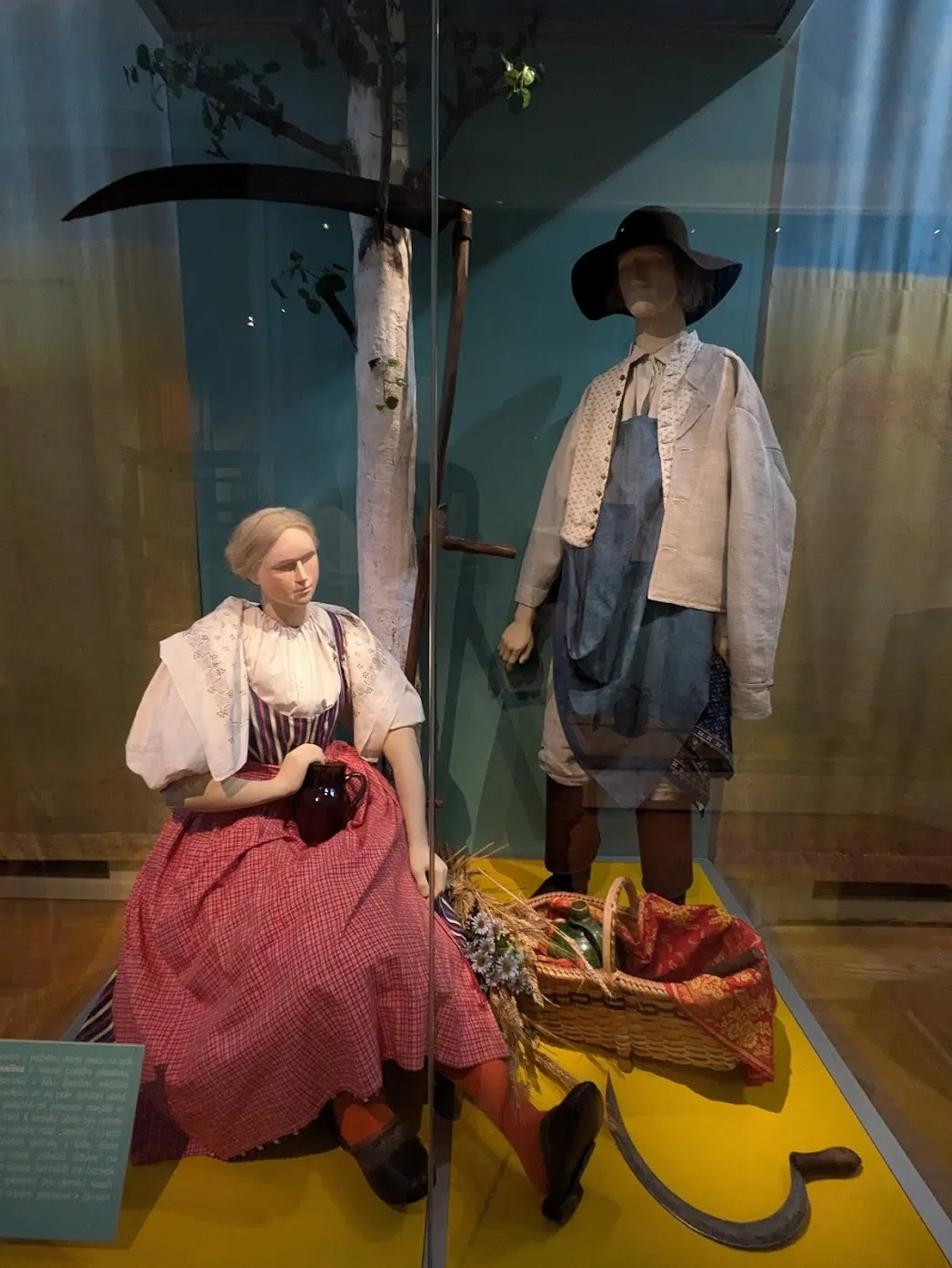
A peasant couple, resting from working in the fields.
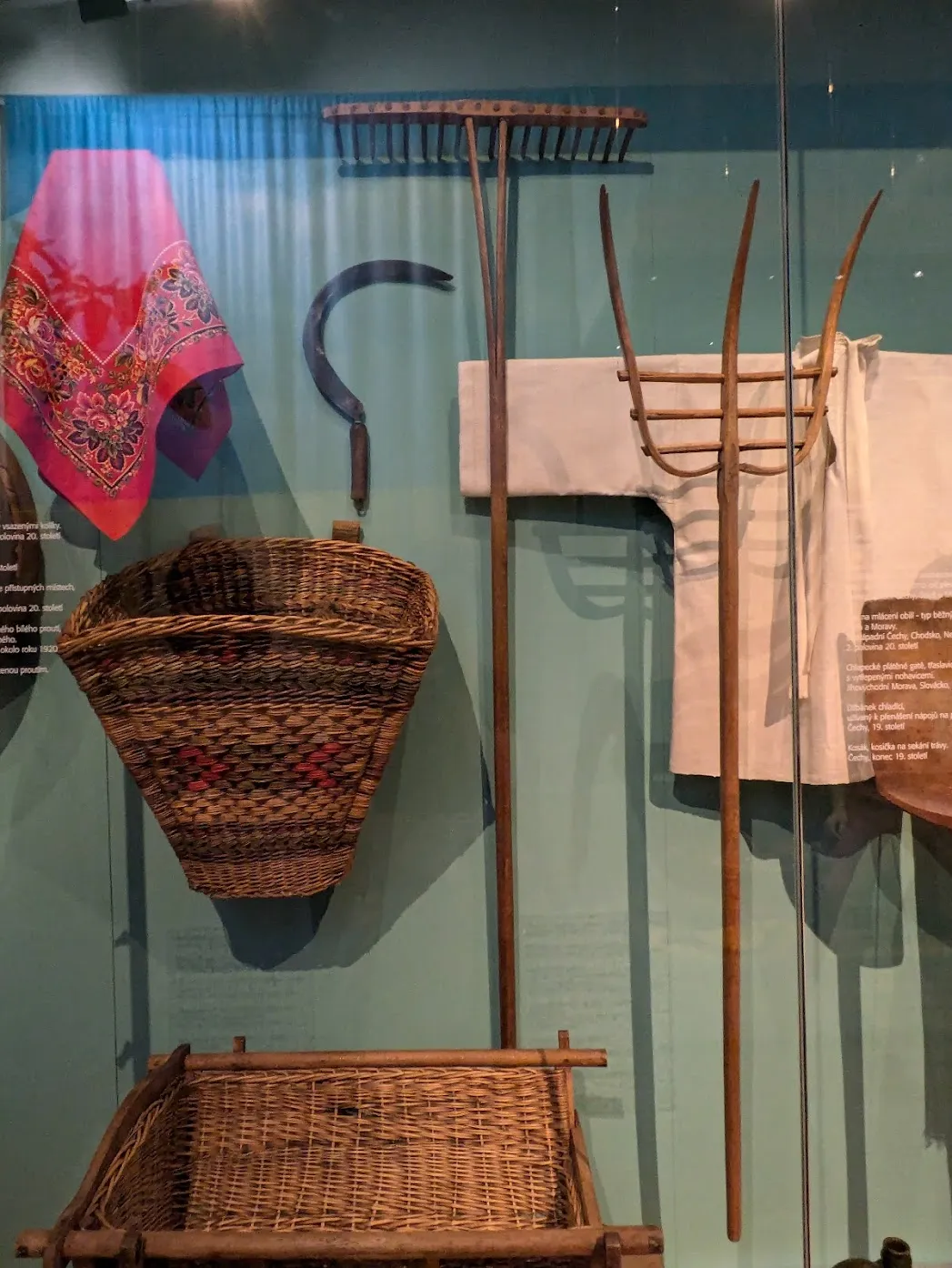
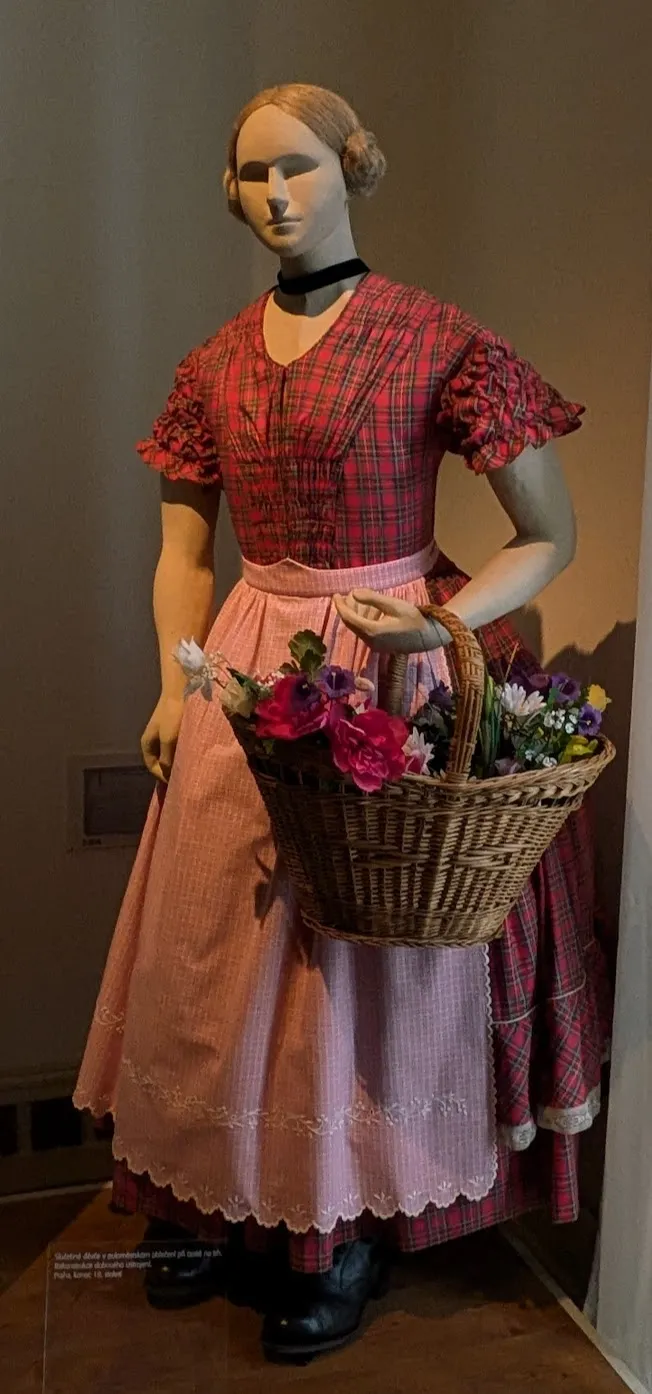
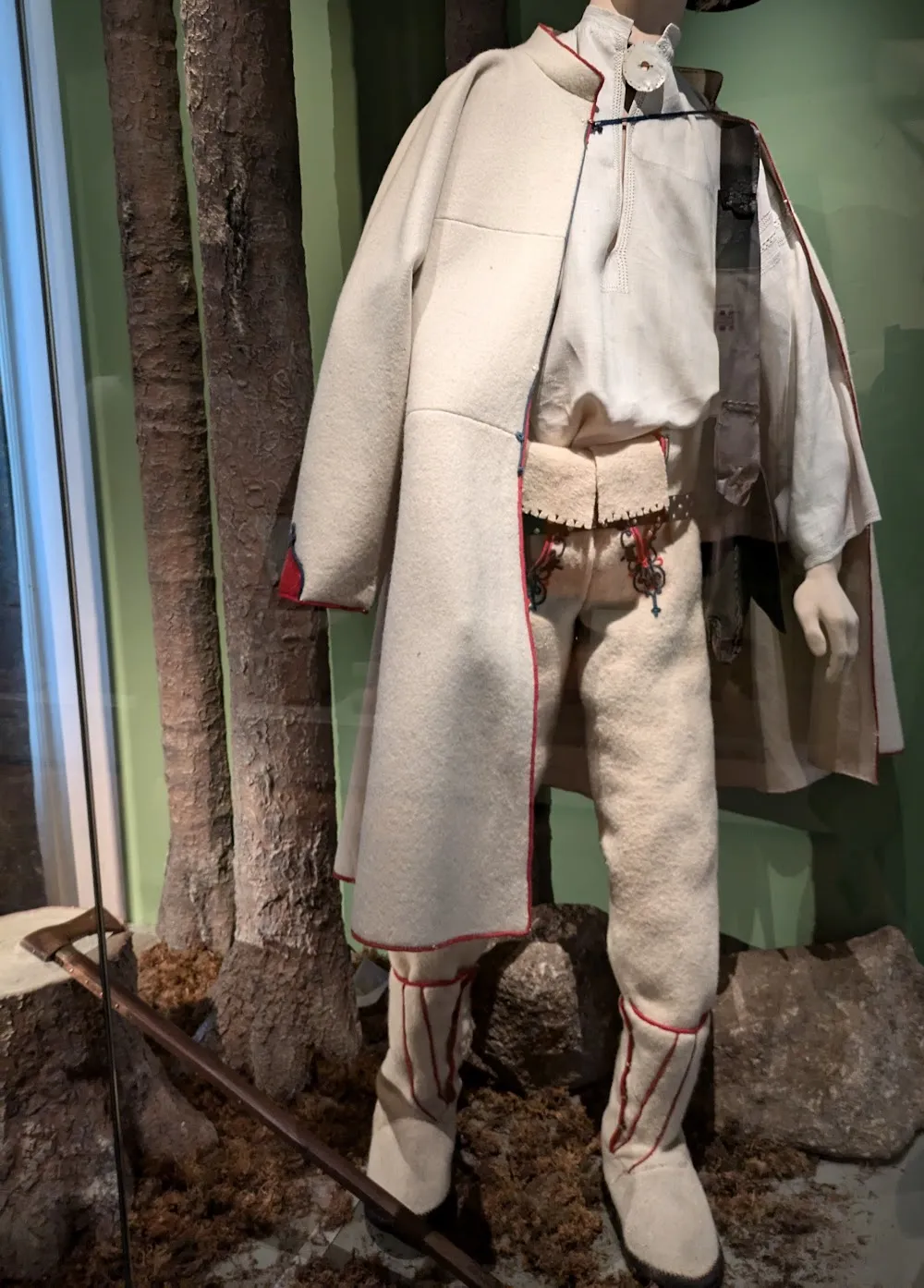
Attire for a woodsman in winter.
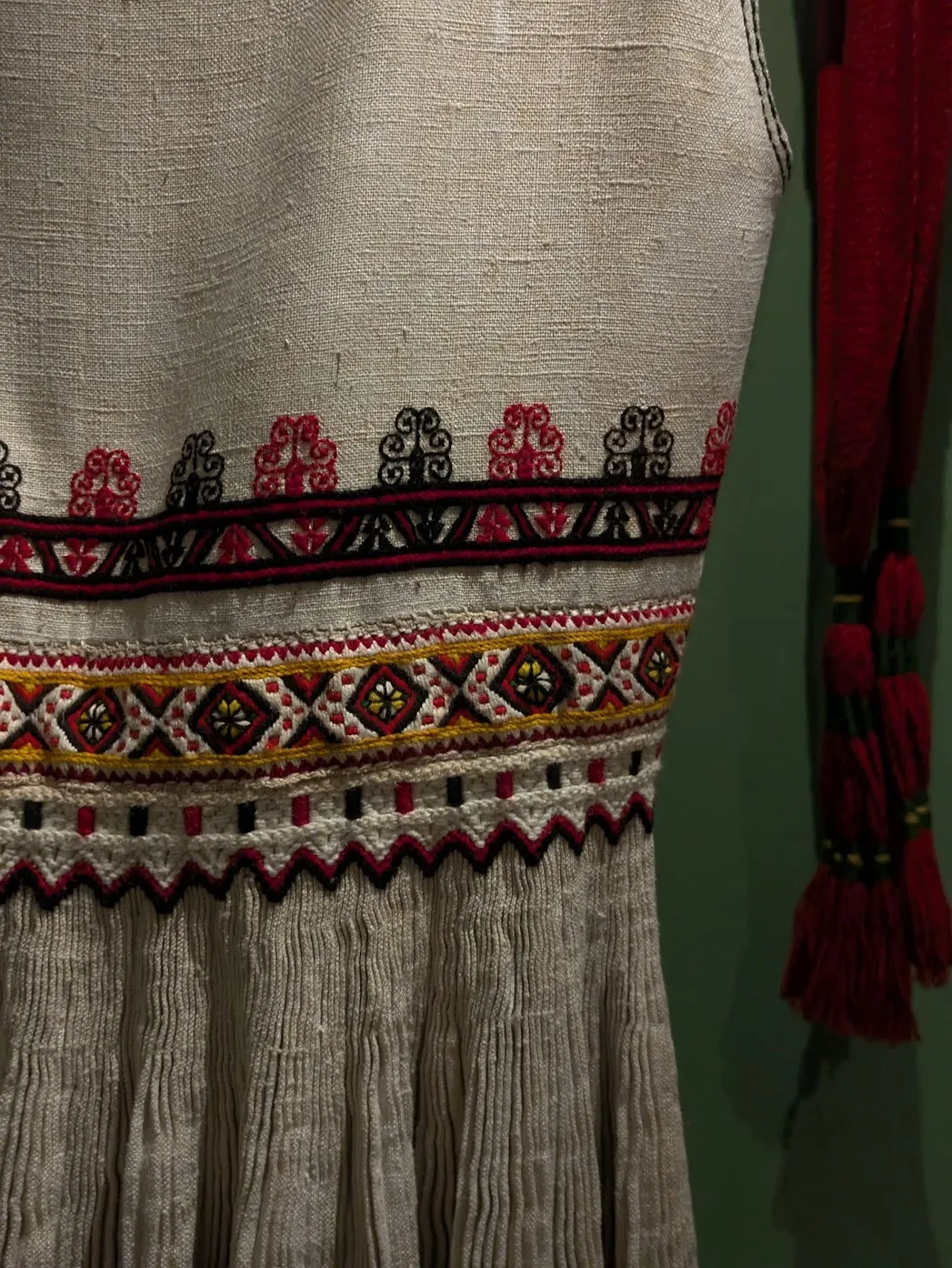
Detail of the embroidery on a sleeveless linen summer dress.
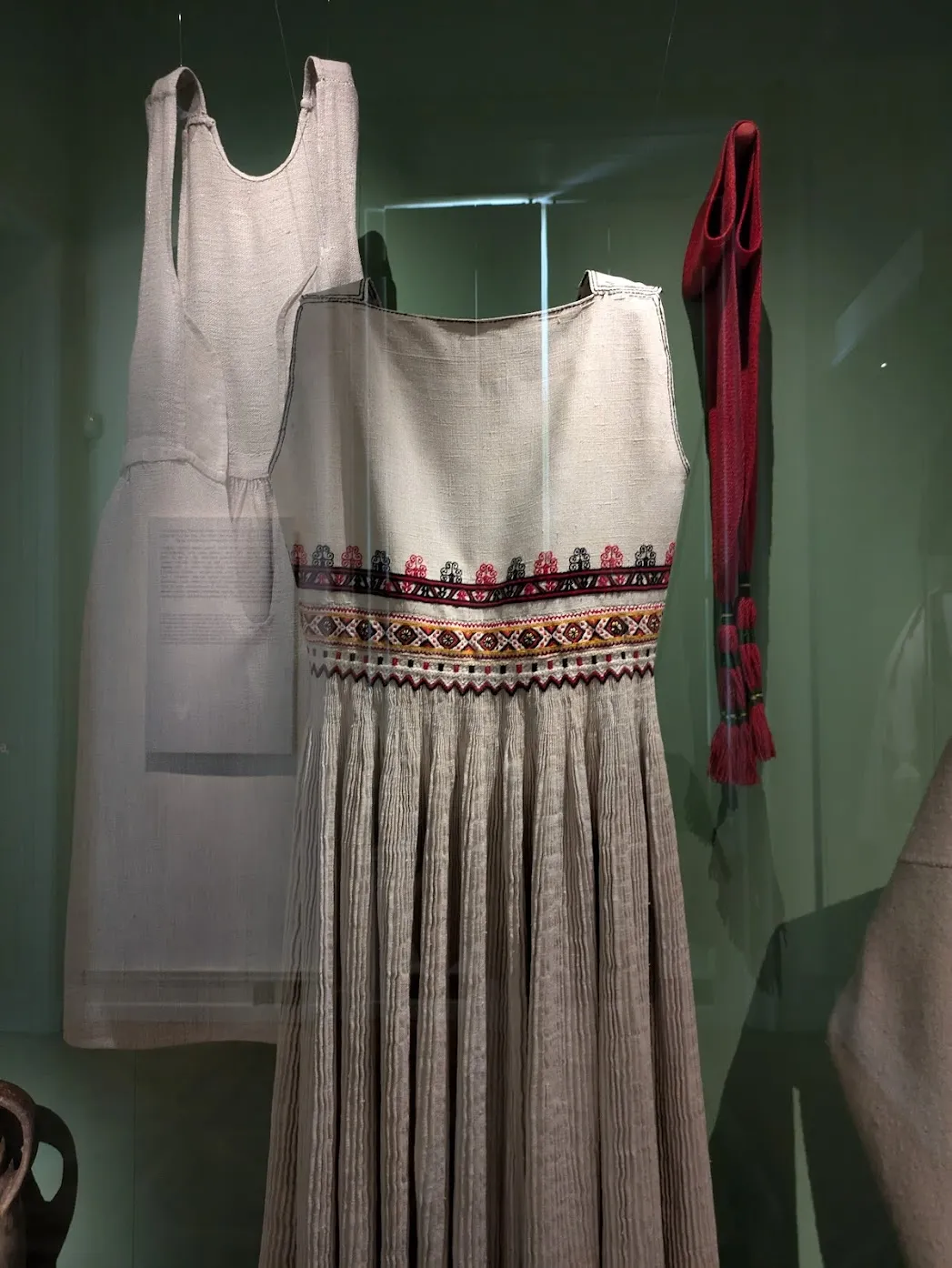
The whole dress.
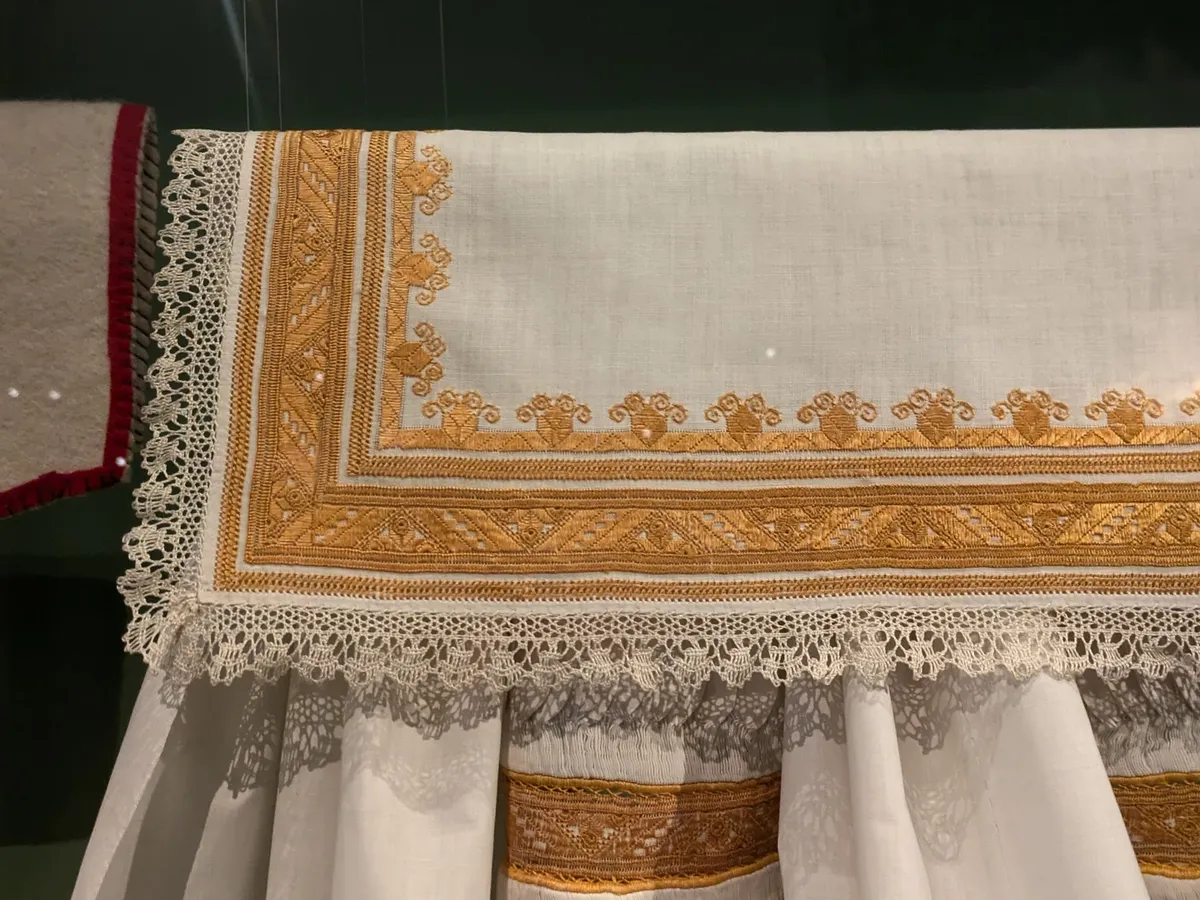
Gold embroidery. I'm unsure what this linen was used for, maybe for a church? Being able to read Czech would've helped here, as the individual exhibits were not labeled in English.
Note that a similar spiral pattern is used as on the summer dress.
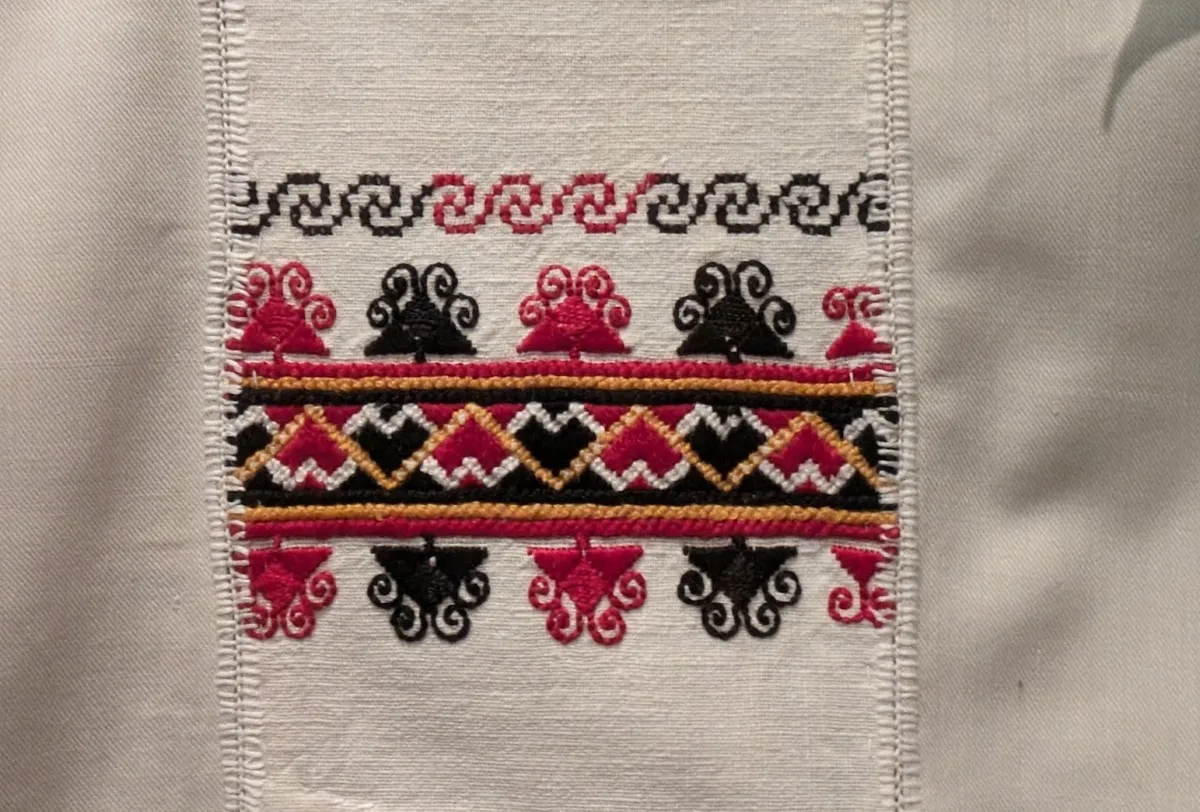
Embroidery on (if I recall correctly) the front of a man's shirt. I'm not sure what type of stitching that is that's up and down the sides in white.
Note that we see the same spiral pattern as before. Black and red seem to be very popular colors in Czech embroidery, especially on white and off-white fabric.
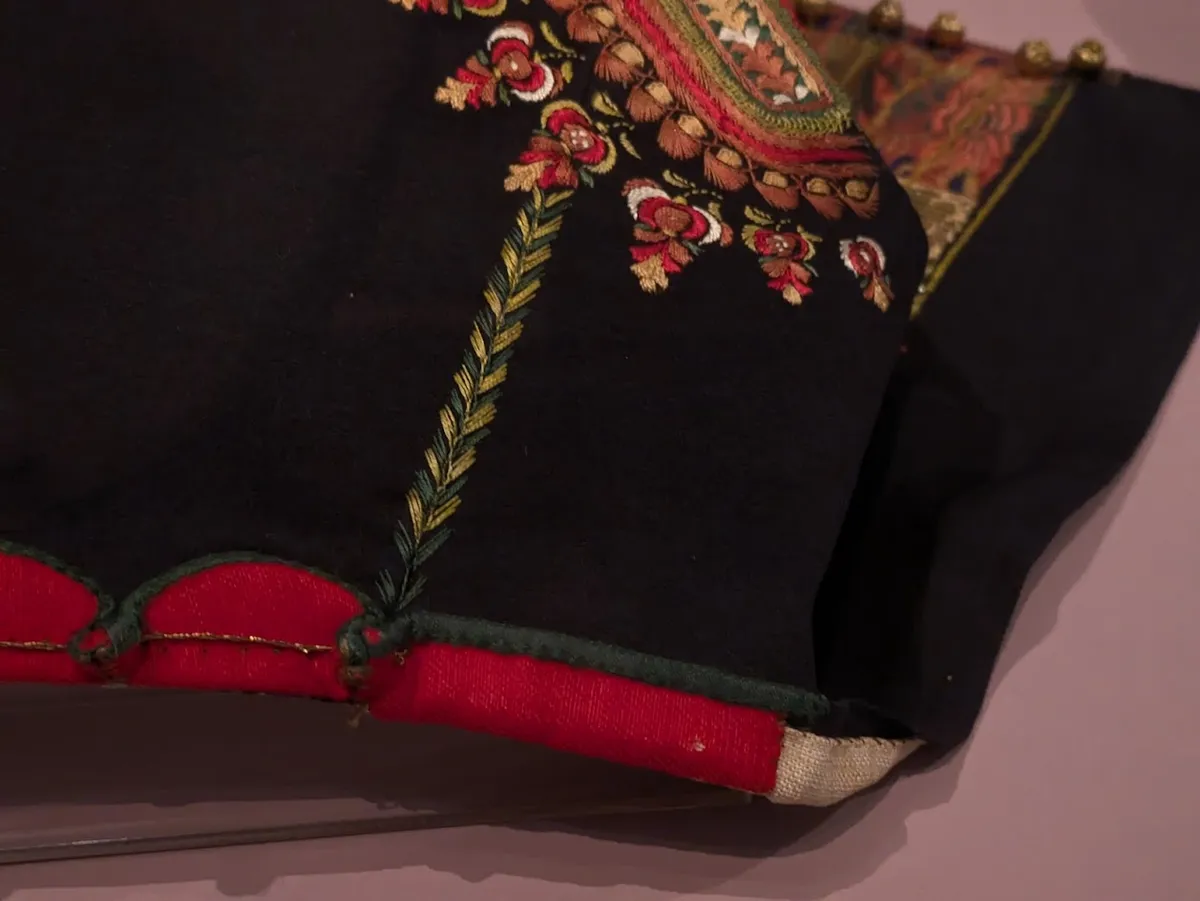
Embroidery on a black bodice. I really love the color contrast against the black background
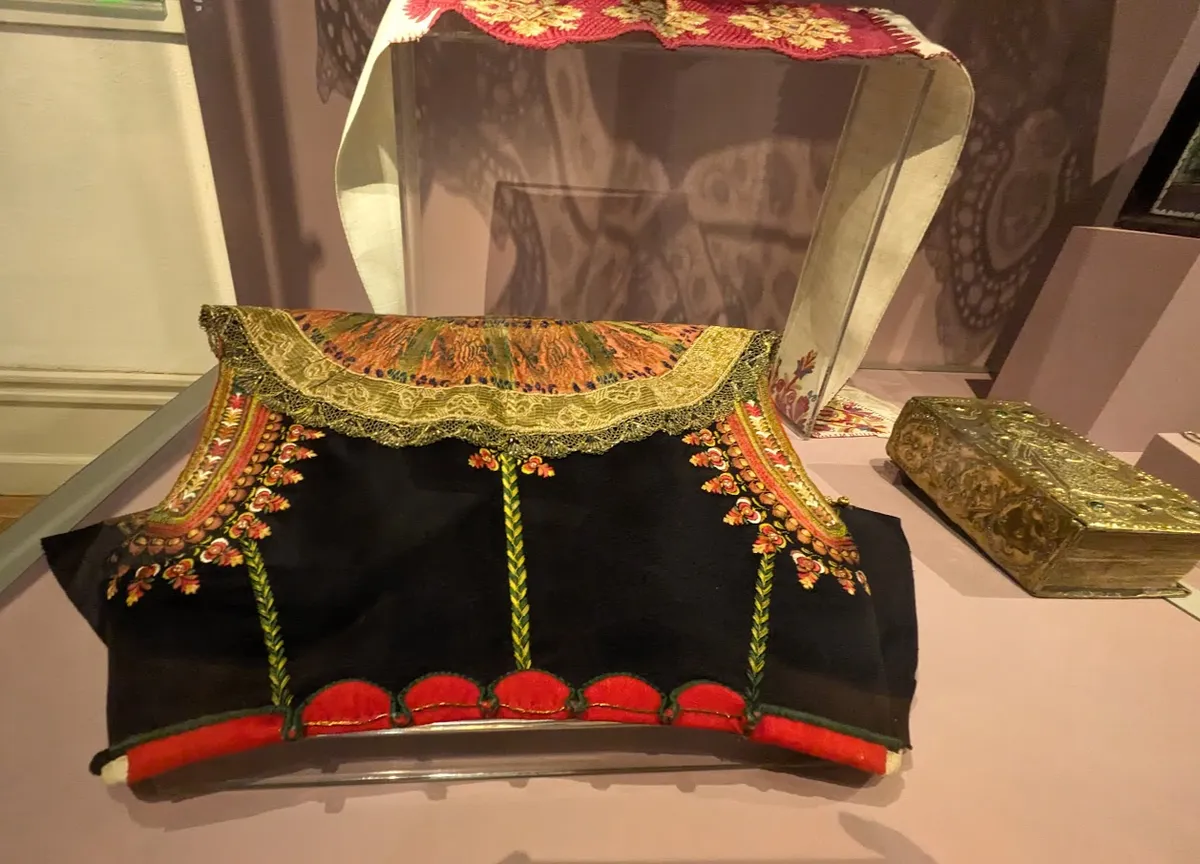
The black bodice.
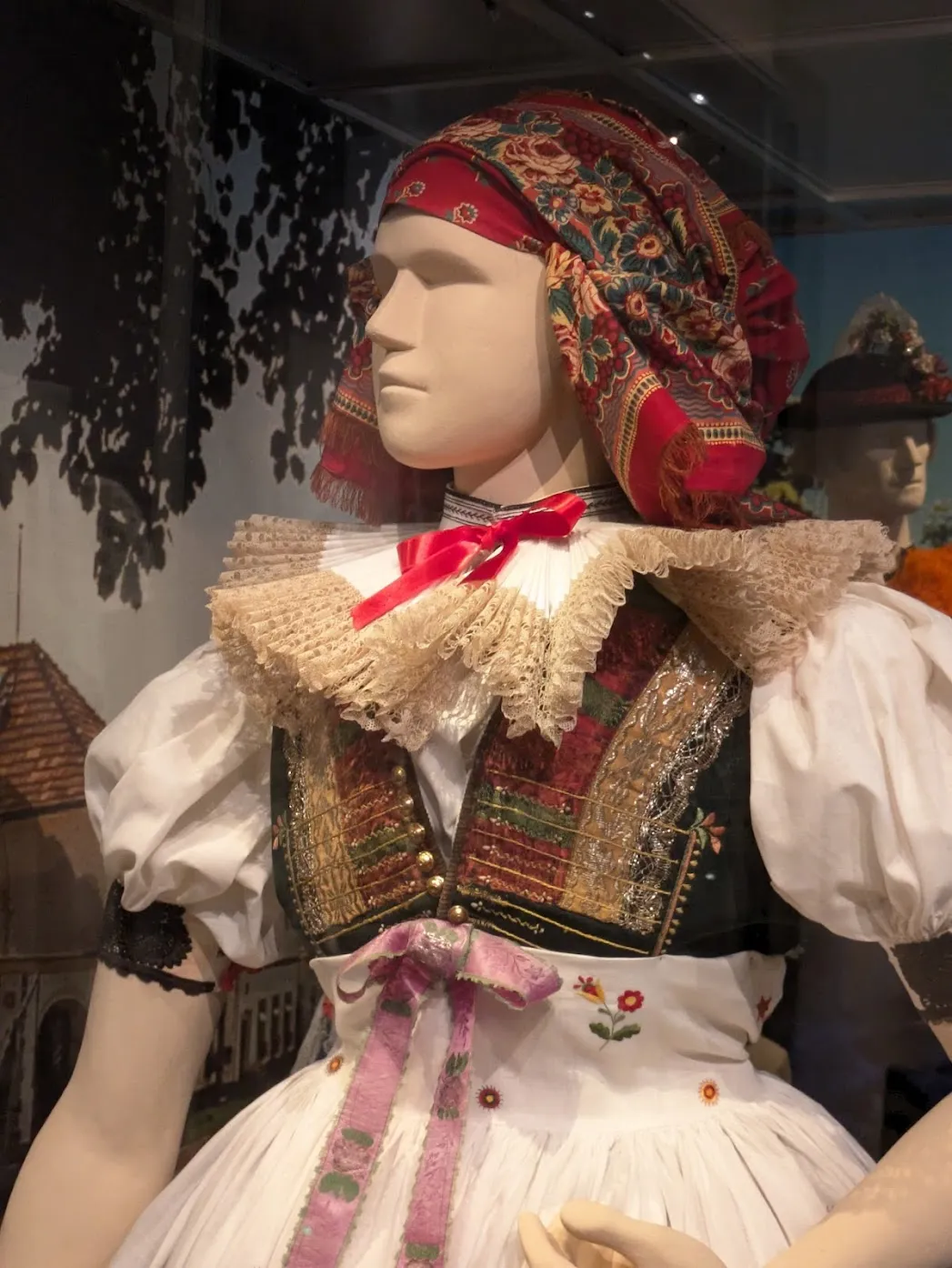
An example of the full outfit such a bodice might go with. She is rocking that lace ruff!
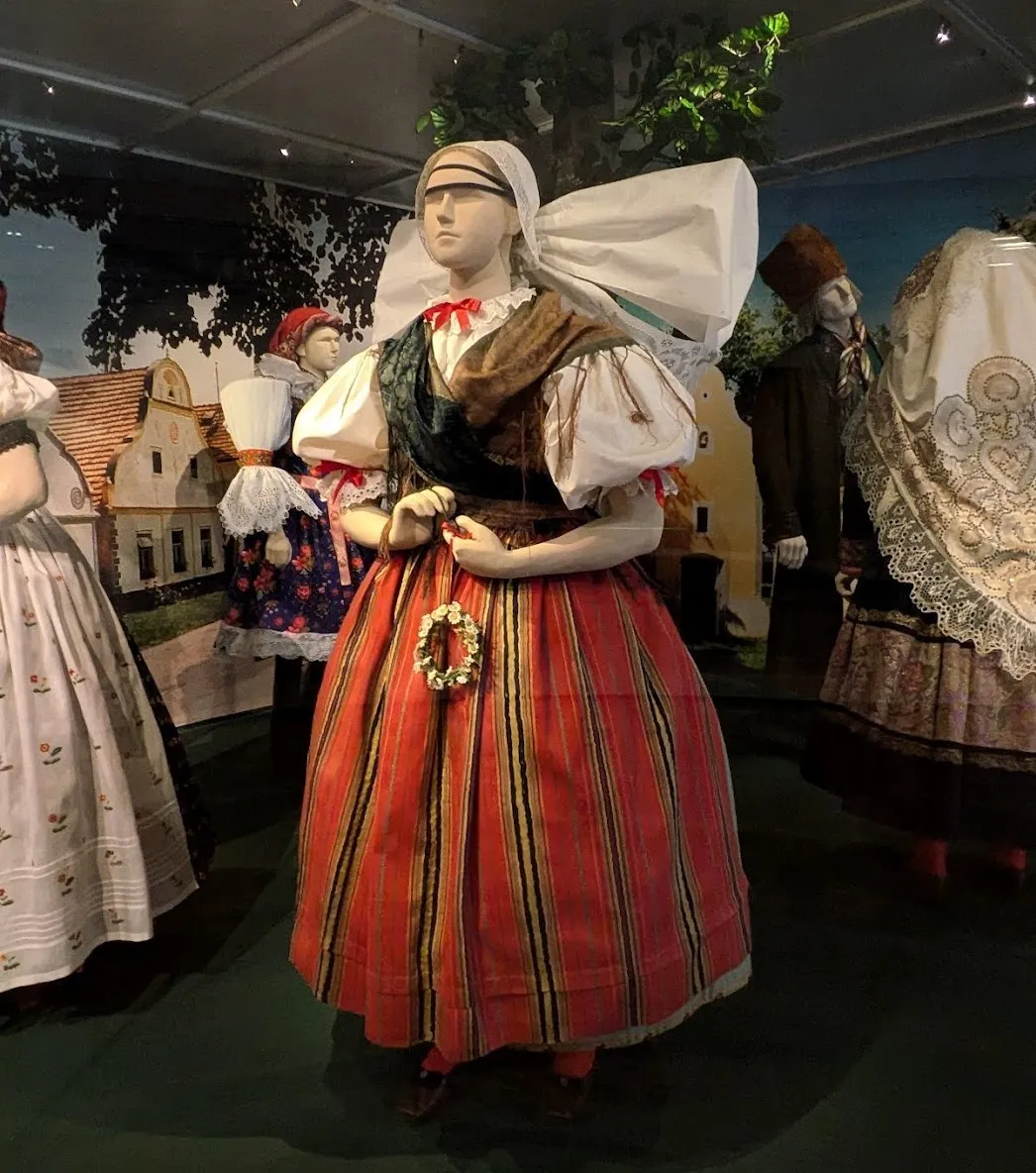
More traditional finery. I believe the exhibit described this as people's church clothes.
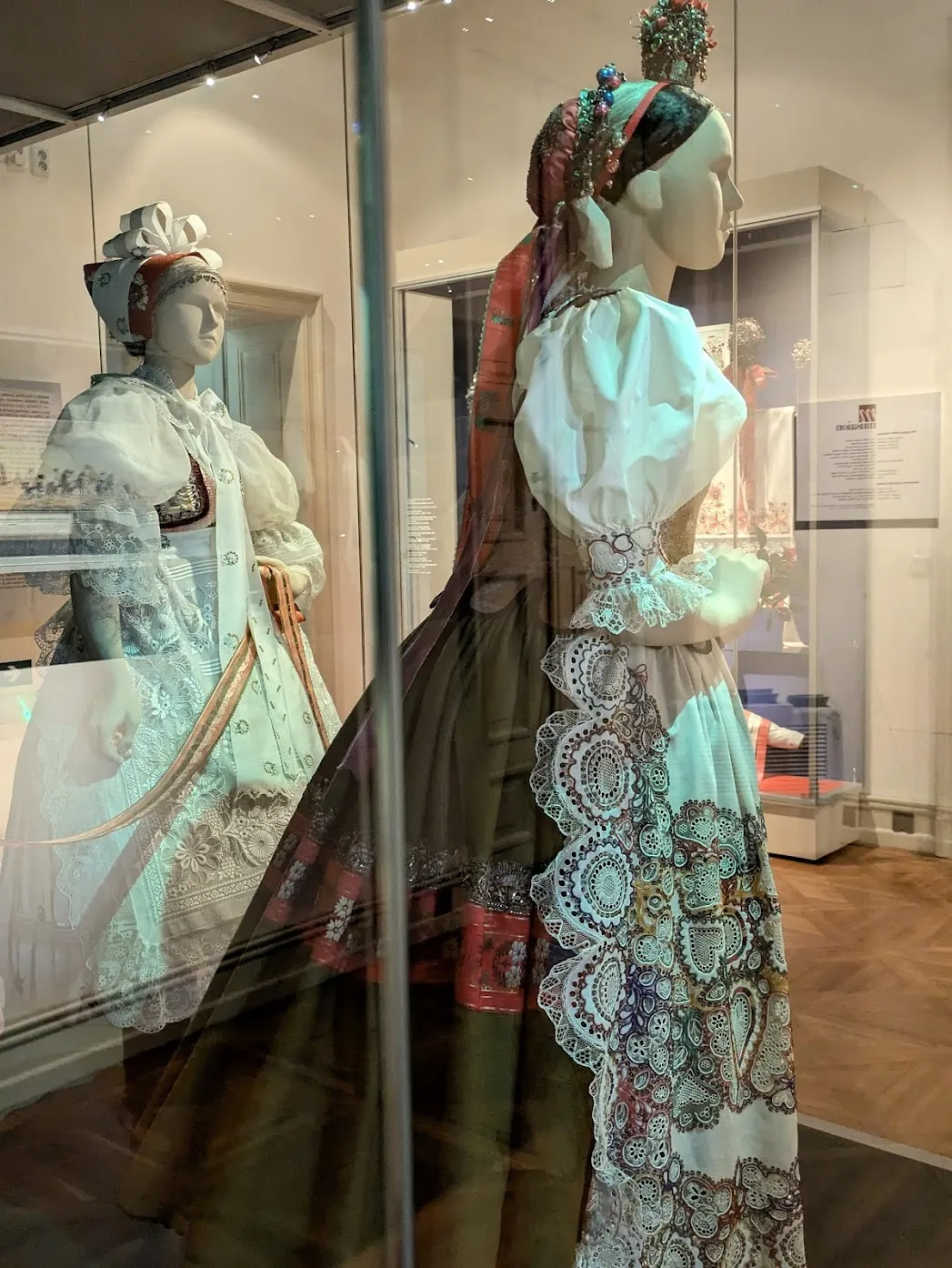
Formalwear for women in a procession. Note the crown or cap on her head, it reminds me a lot of similar headgear that women in the Schwalm region of Germany tuck their hair into.
In Germany, Little Red Riding Hood is called Rotkäppchen, referring to the red cap she wears on her head. Folklorists often associate her with the Hesse region, due to her headgear so closely matching the Schwalm traditional dress. (Hesse itself is very proud of this, and calls itself Rotkäppchenland.)
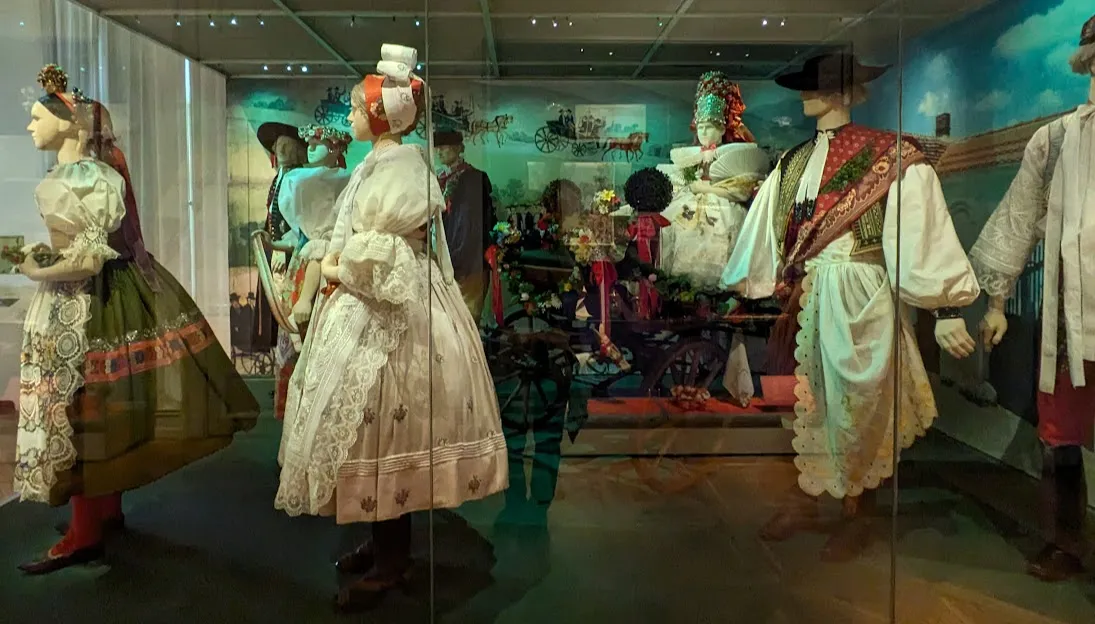
The full procession. Clearly, the figure in the coach is someone very important.
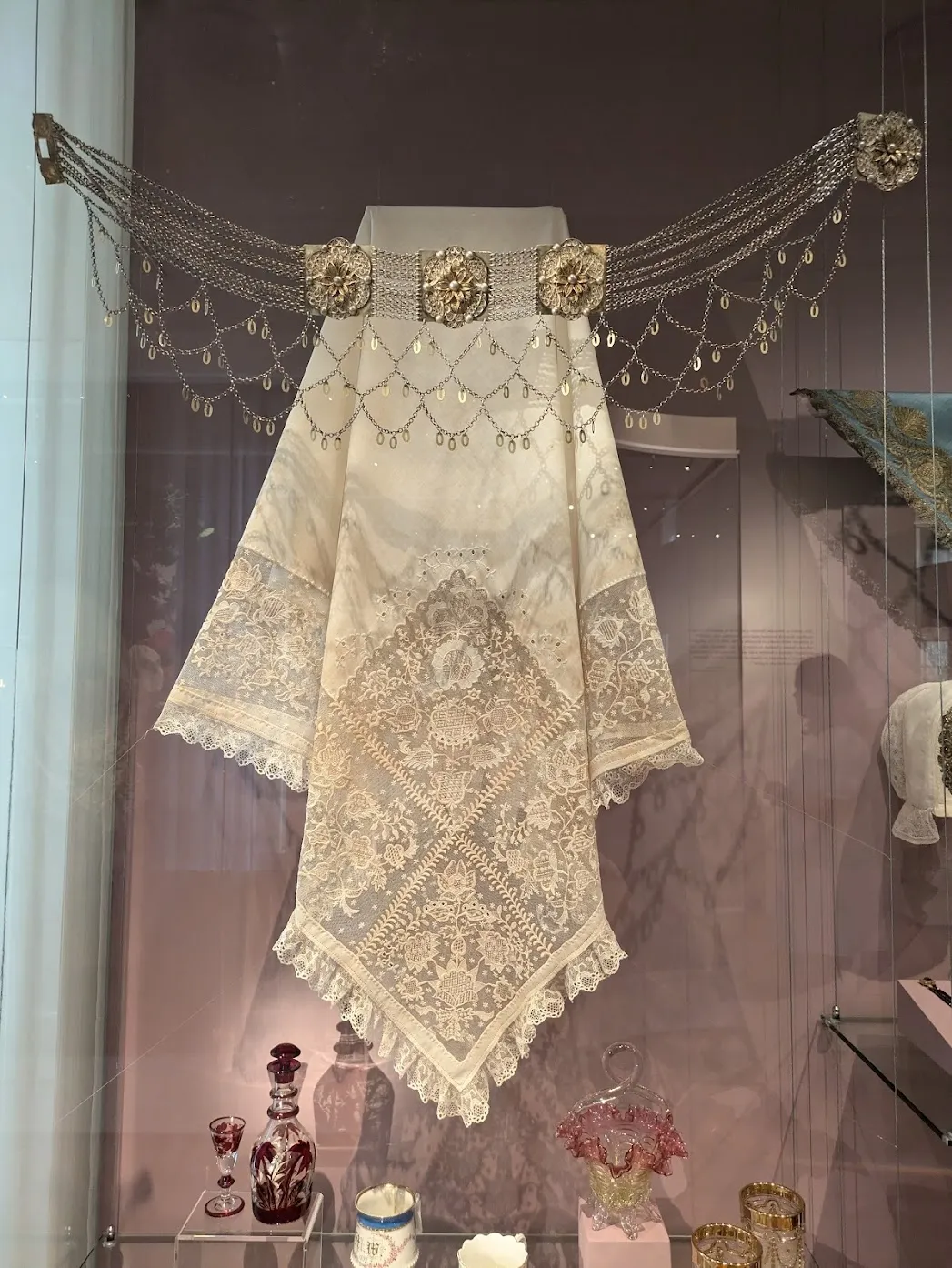
A veil. The glassblown bottles beneath it are Bohemian glass, which is a signature of the Czech Republic and has been since the Renaissance era.
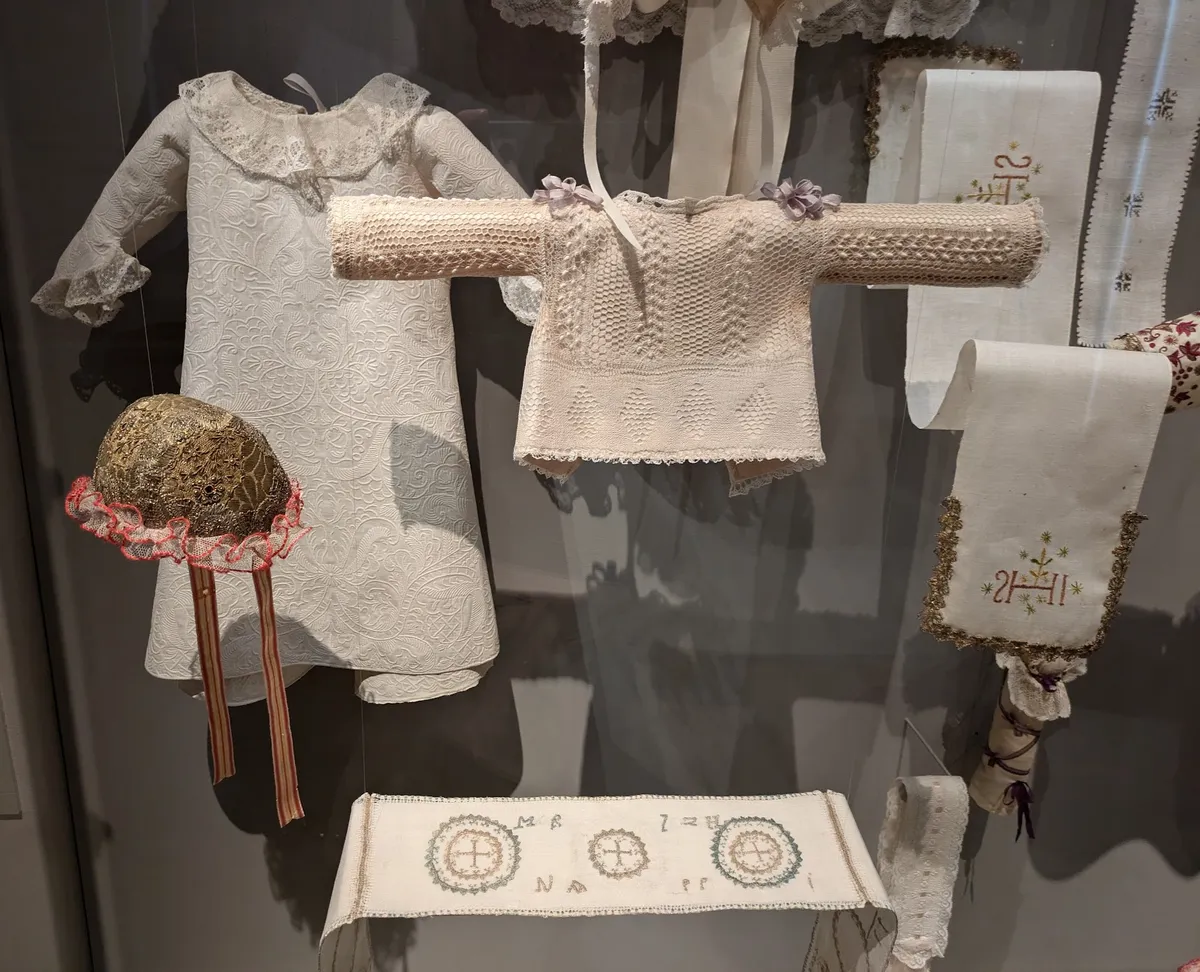
Clothes made for a baby. Note the ringed cross with arms of equal length, a symbol of Christianity.
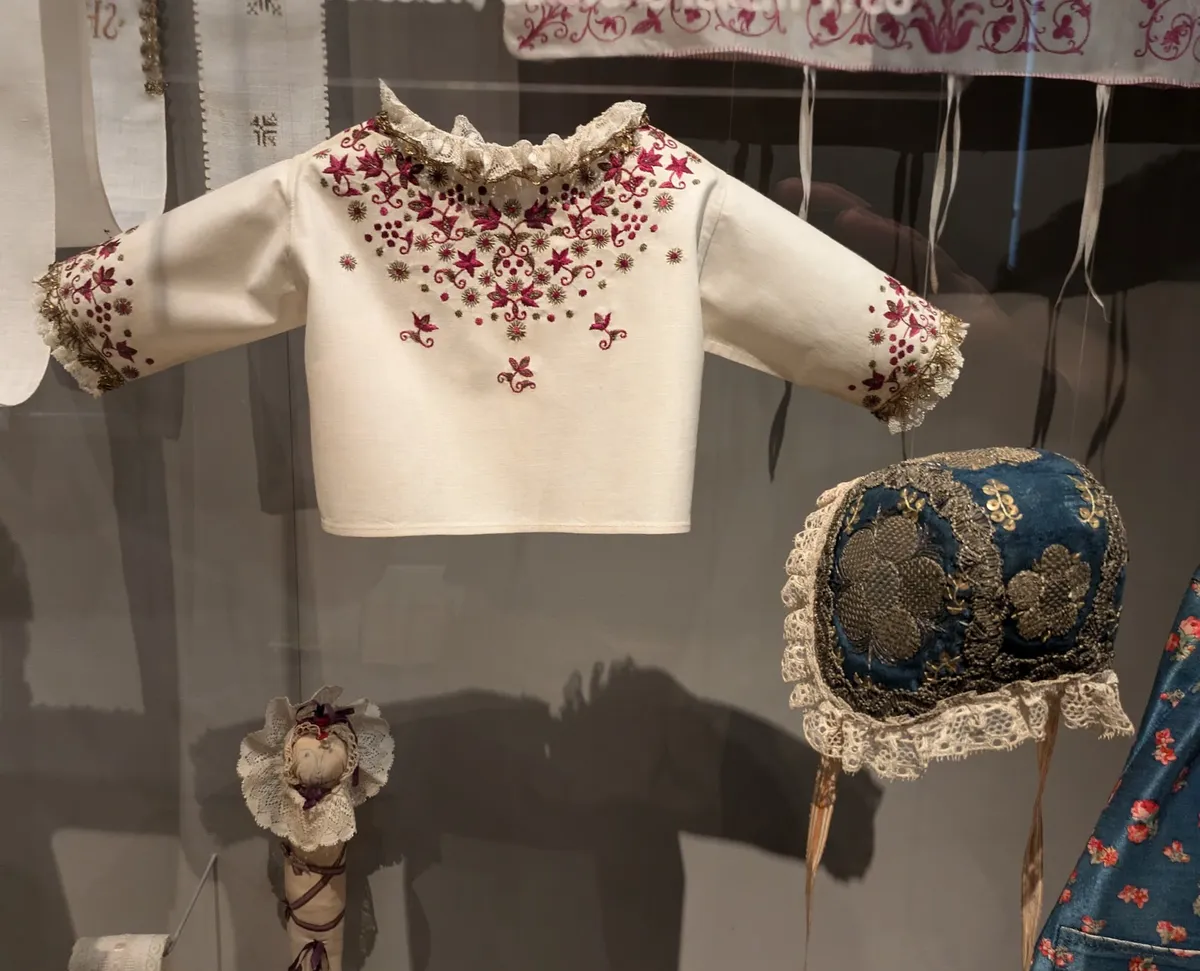
Detail of a shirt and bonnet made for a baby (along with a doll?) Look at how incrediby intricate the design is. Imagine trying to wriggle a baby into that, and keep it clean if the baby vomits or gets food all over themself.
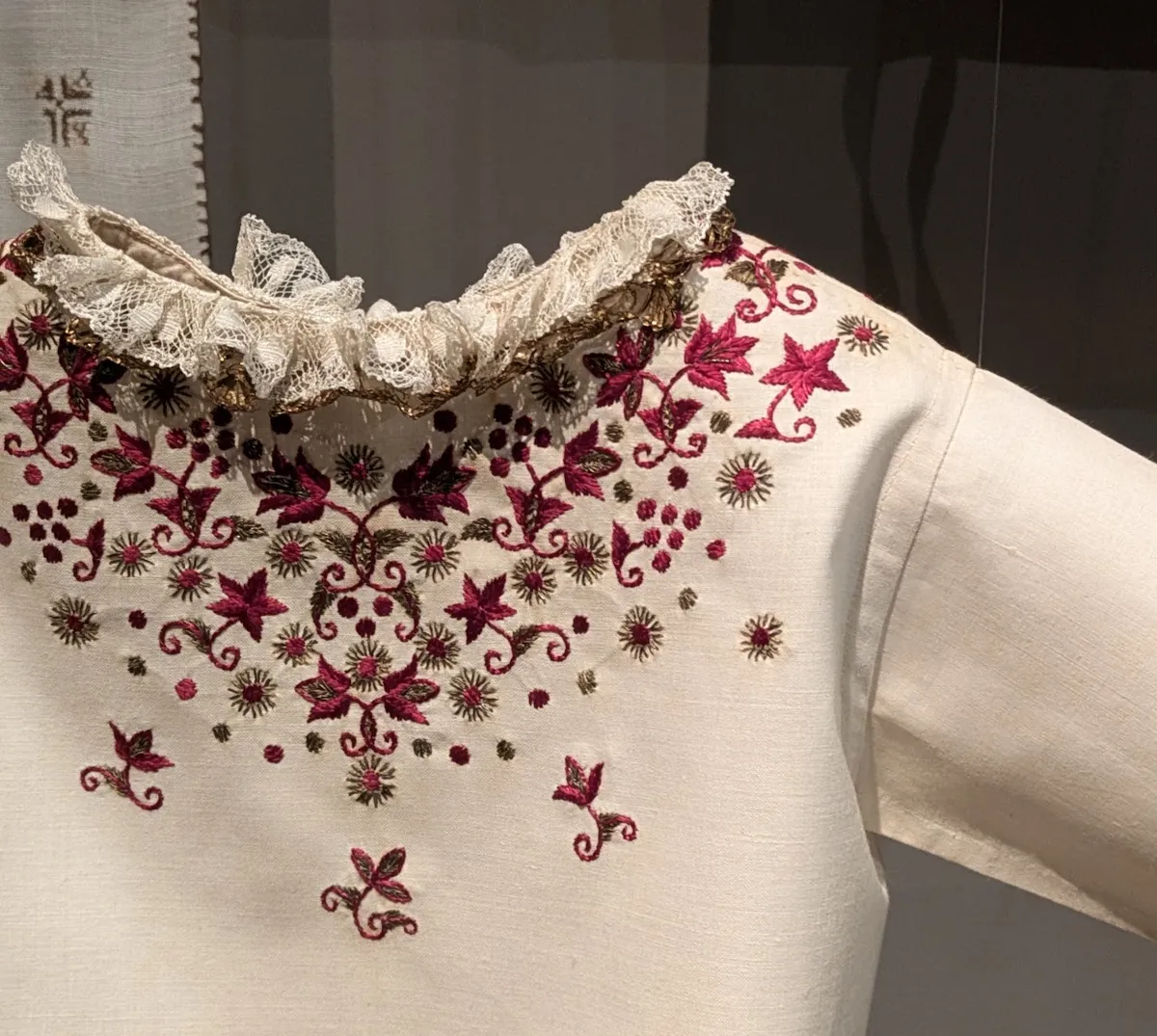
It's so beautiful!
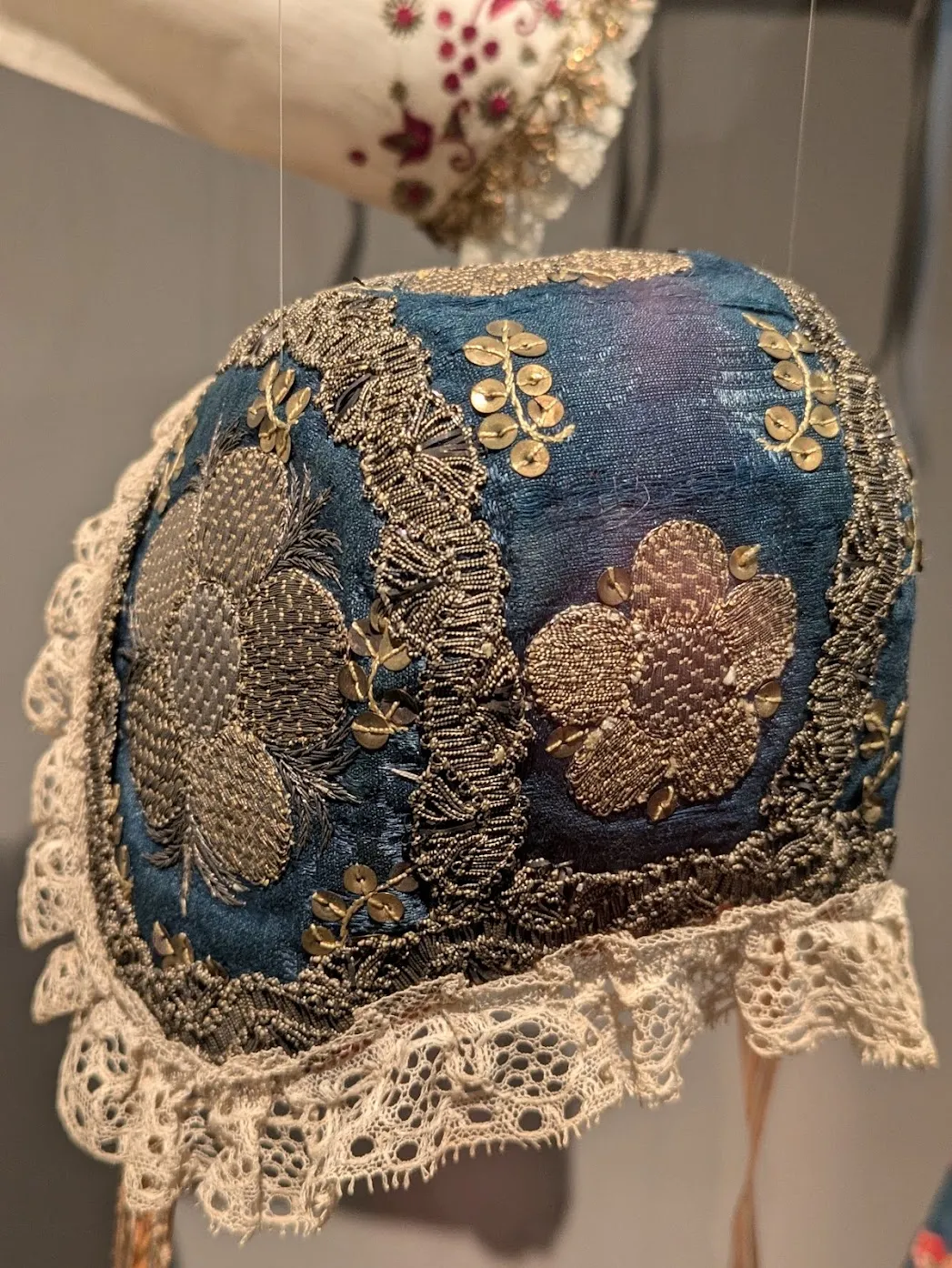
Sequins! The presence of metal sequins really shows the high status the baby who wore it must have had.
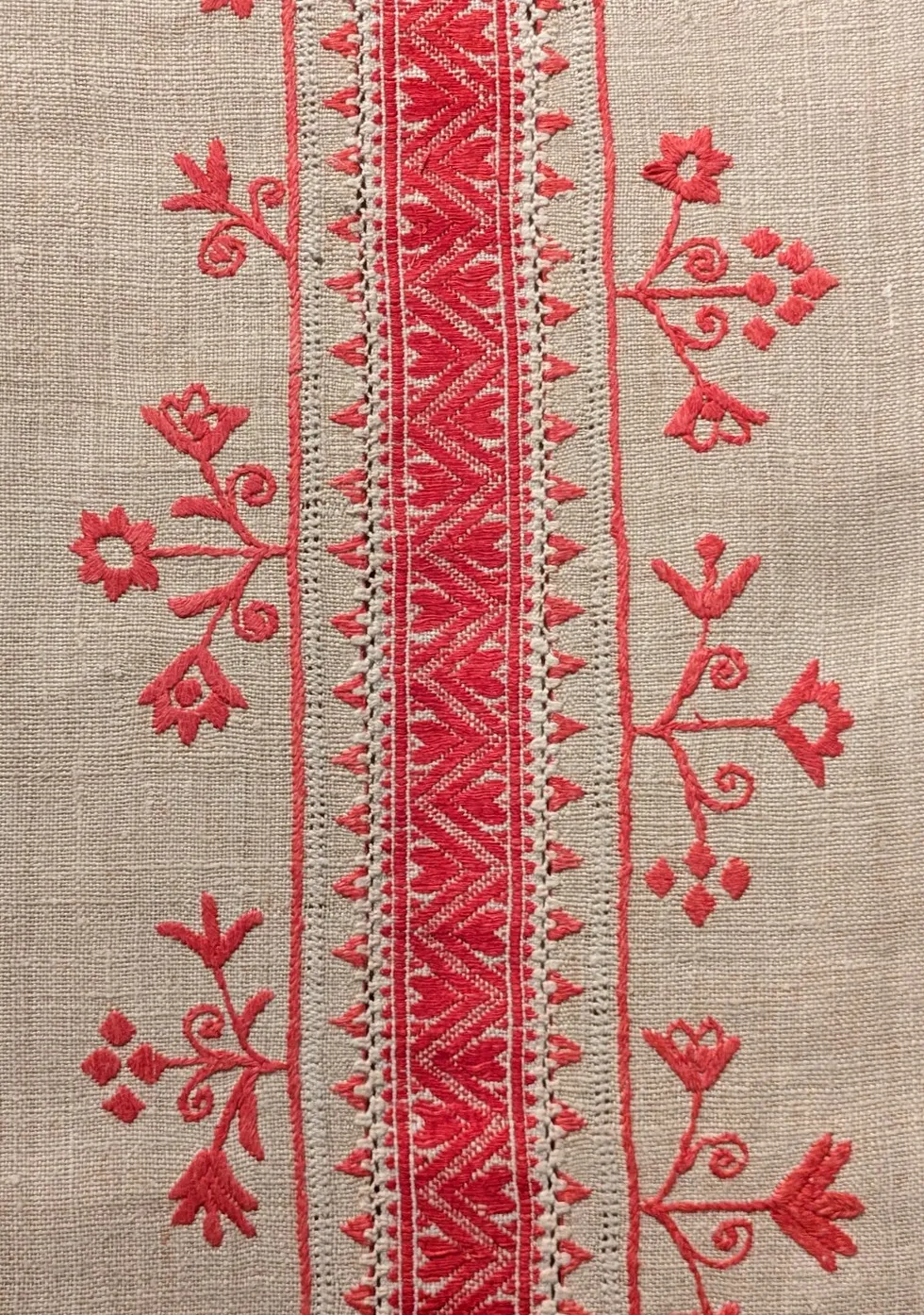
Detail of embroidery on a curtain.
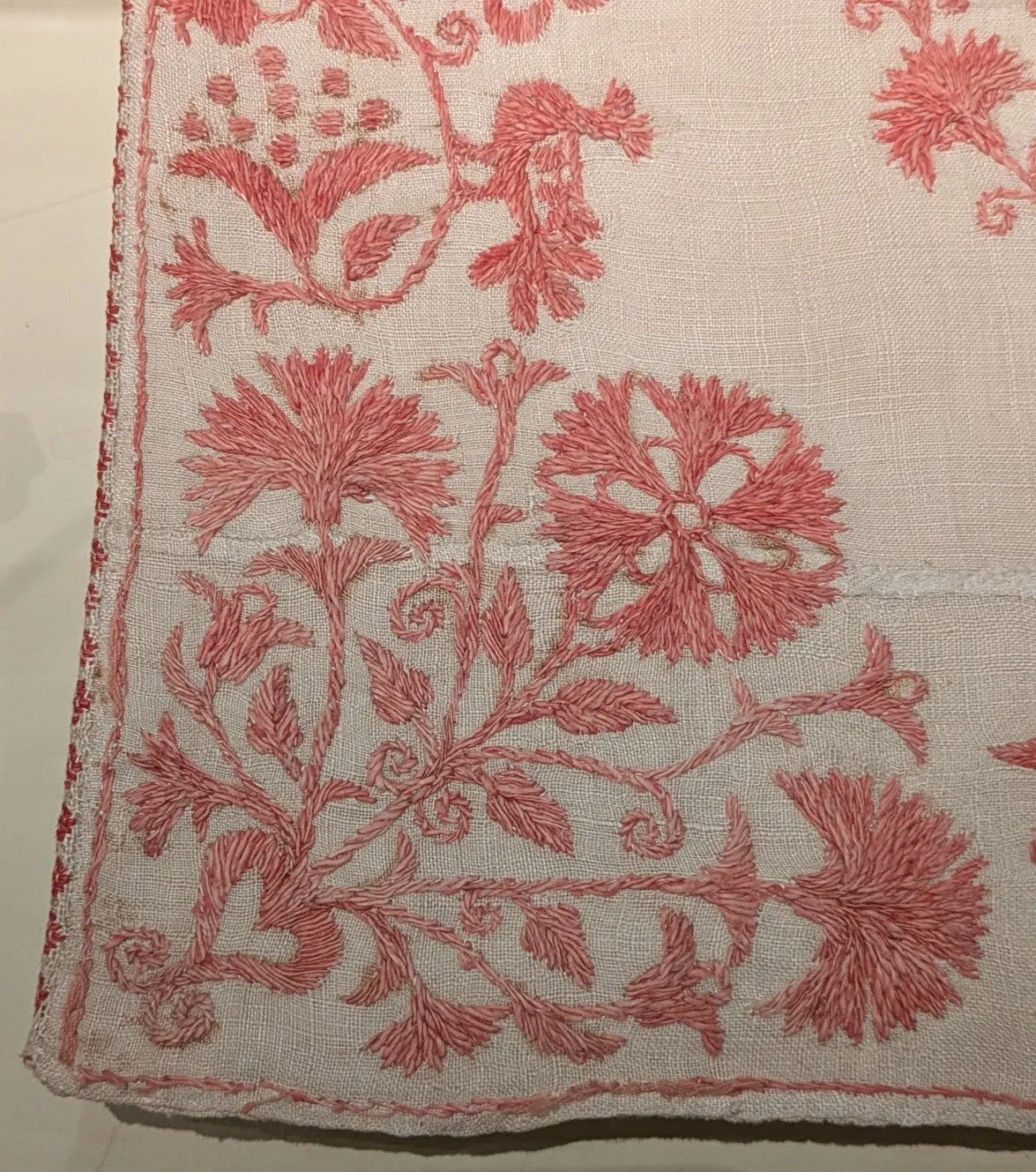
Detail of embroidery on a linen. I'm not sure what stitch this is called.
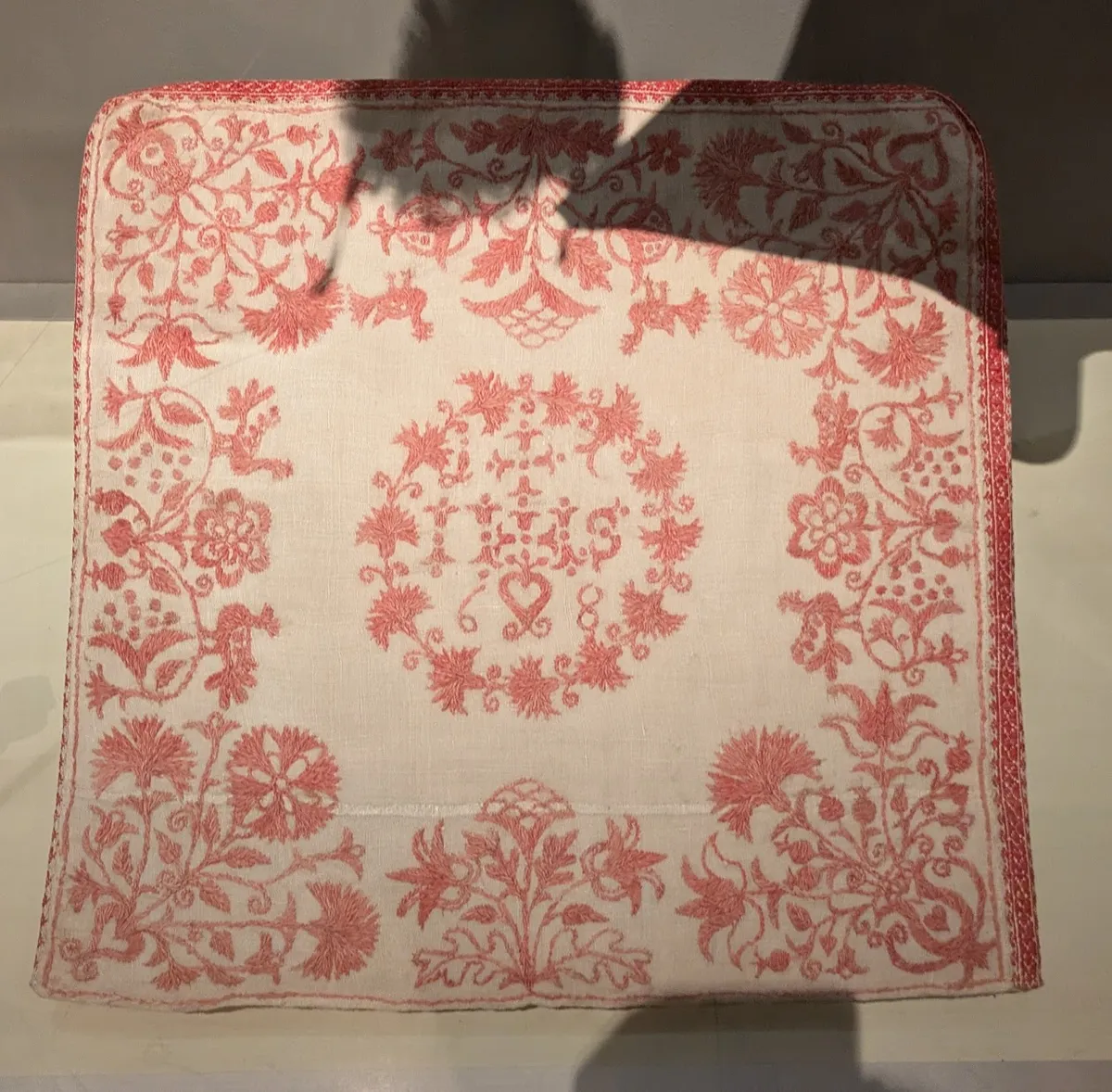
The full linen. Looks to have been made in 1868! IHS is a Christogram associated with Catholicism; the region of Bohemia was converted to Catholicism when it was part of the Austro-Hungarian empire.
Notice how the design of the linen varies across the four corners. You have to keep things interesting!
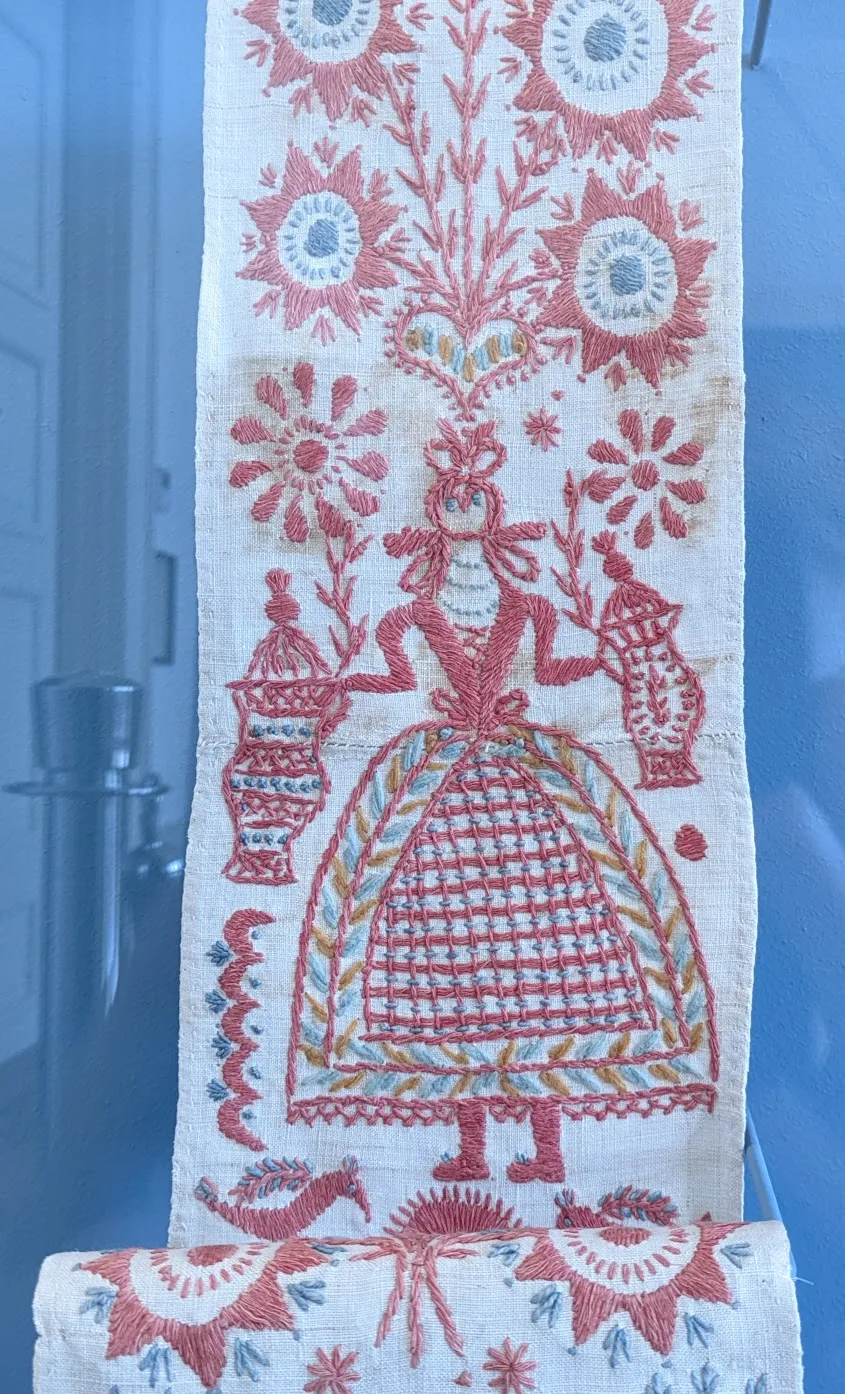
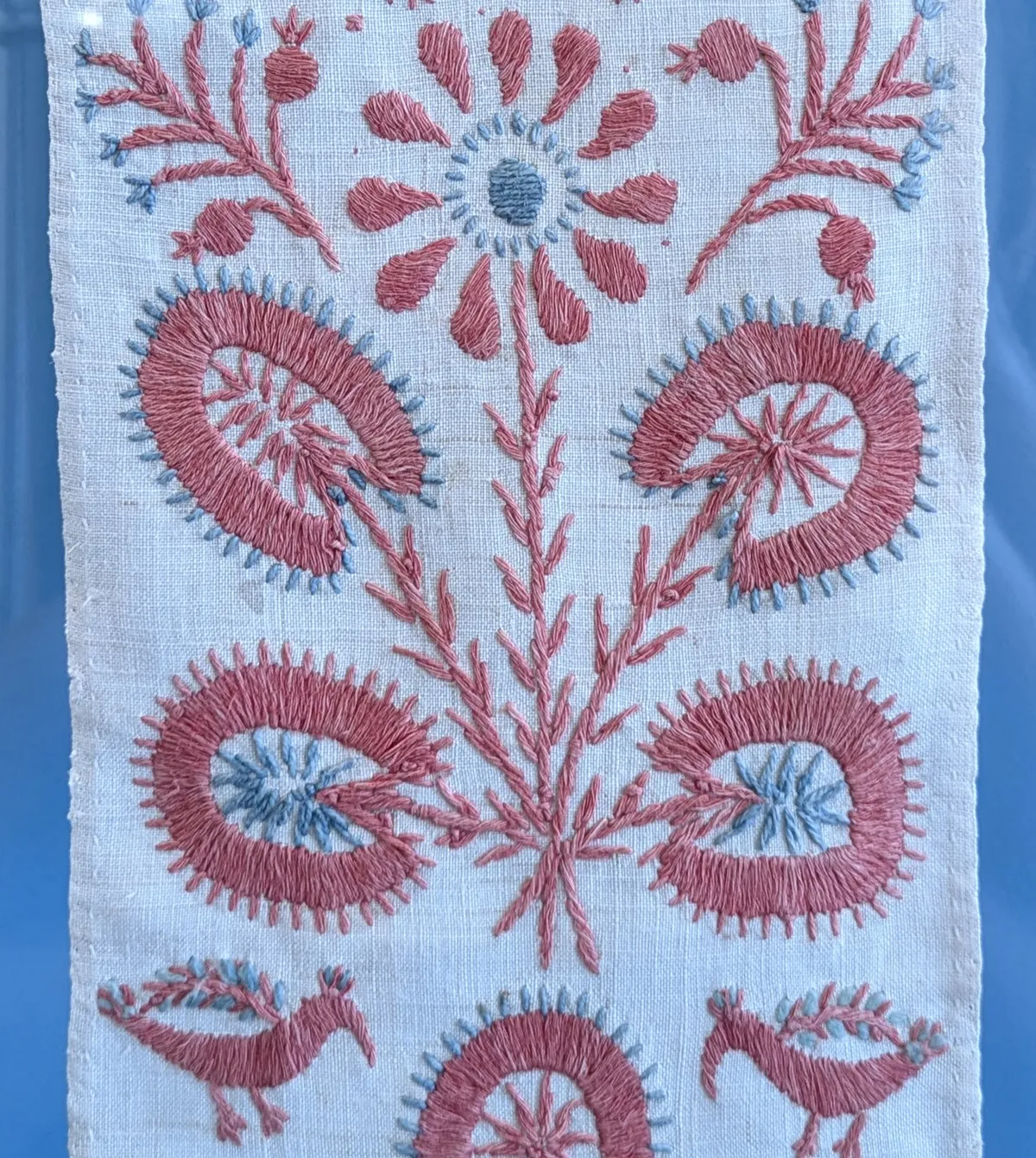
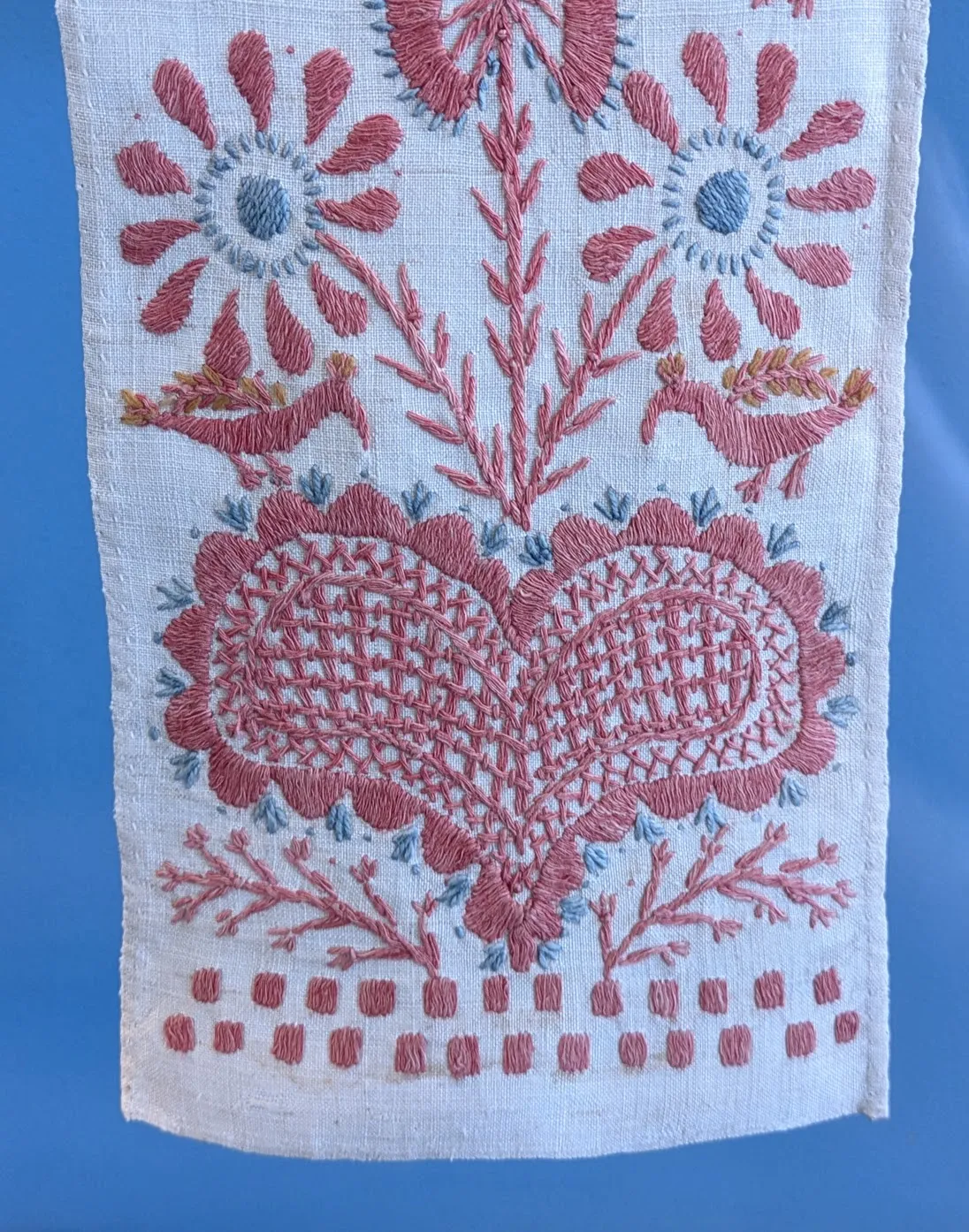
I didn't quite get a full-length picture of this linen (a table runner?), but look how beautiful it is! I love that the artist put an image of a woman on it.