shanghainese art deco
Last year, a friend of mine (who's authorized me to call them M) went with me to an exhibition of Shanghainese art deco. I had known nothing of this corner of history beforehand, so it was a lovely way to spend an afternoon. M has studied Chinese for enough years to have reached proficiency (!), so they could translate much of the text.
The collection was of posters and graphic design dating mostly from the 1920s and 30s. During this time, Western companies were exporting large quantities of goods to the Chinese market, and both Chinese and foreign companies dove into the concept of the advertising poster. Every single poster contained at least one image of a woman, always one who was highly fashionable. The gallery explained how advertising's shift from traditional imagery such as lunar calendar symbols to that of glamorous women dovetailed with rising independence for urban Chinese women.
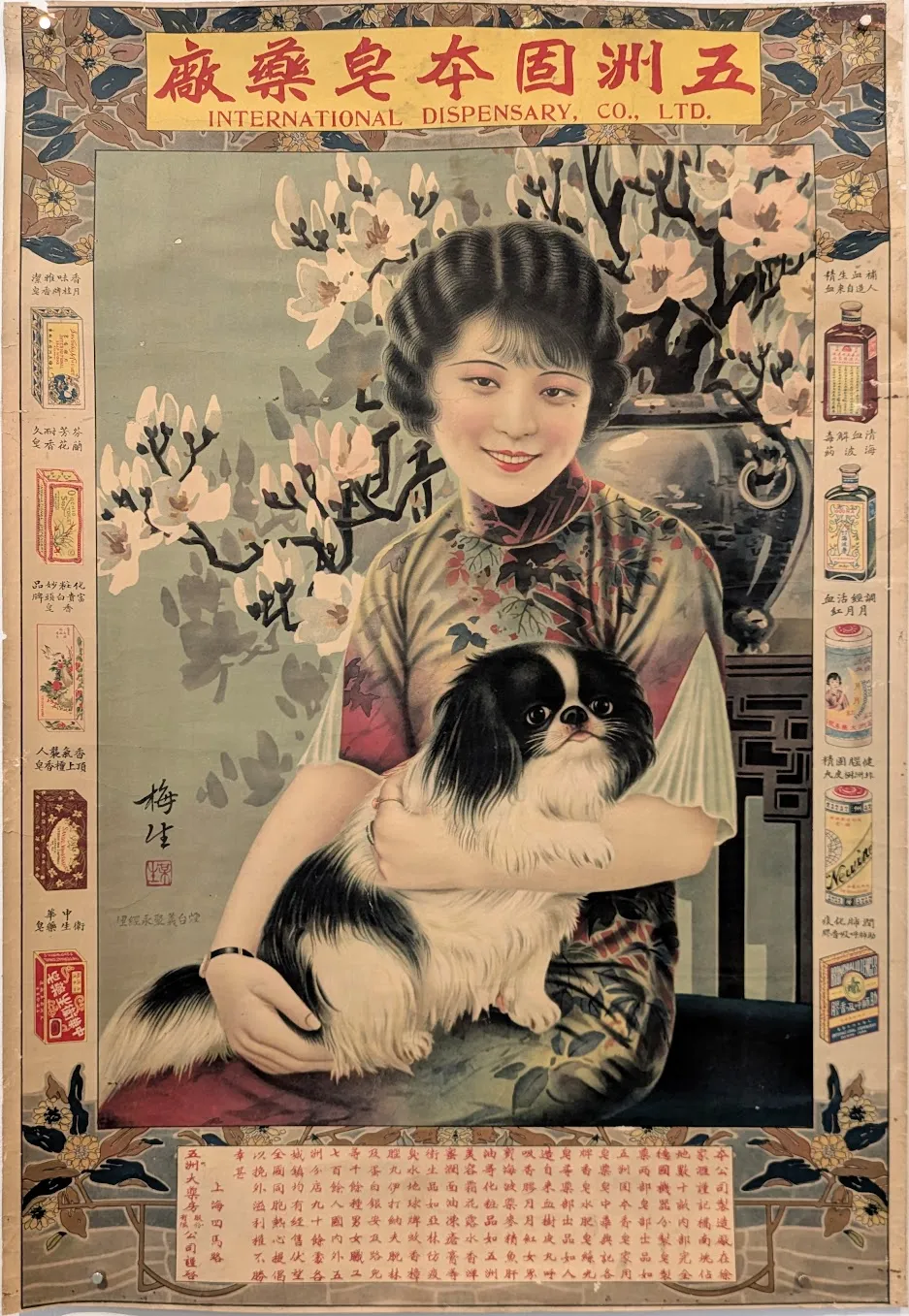
Many of these pieces were used as calendars – they could be hung as decoration and replaced at the year's end. (The pink box at the bottom contains all the dates for the coming year.) This one also features products sold by the company that produced the calendar. In the background, there's penjing, the Chinese equivalent to bonsai.
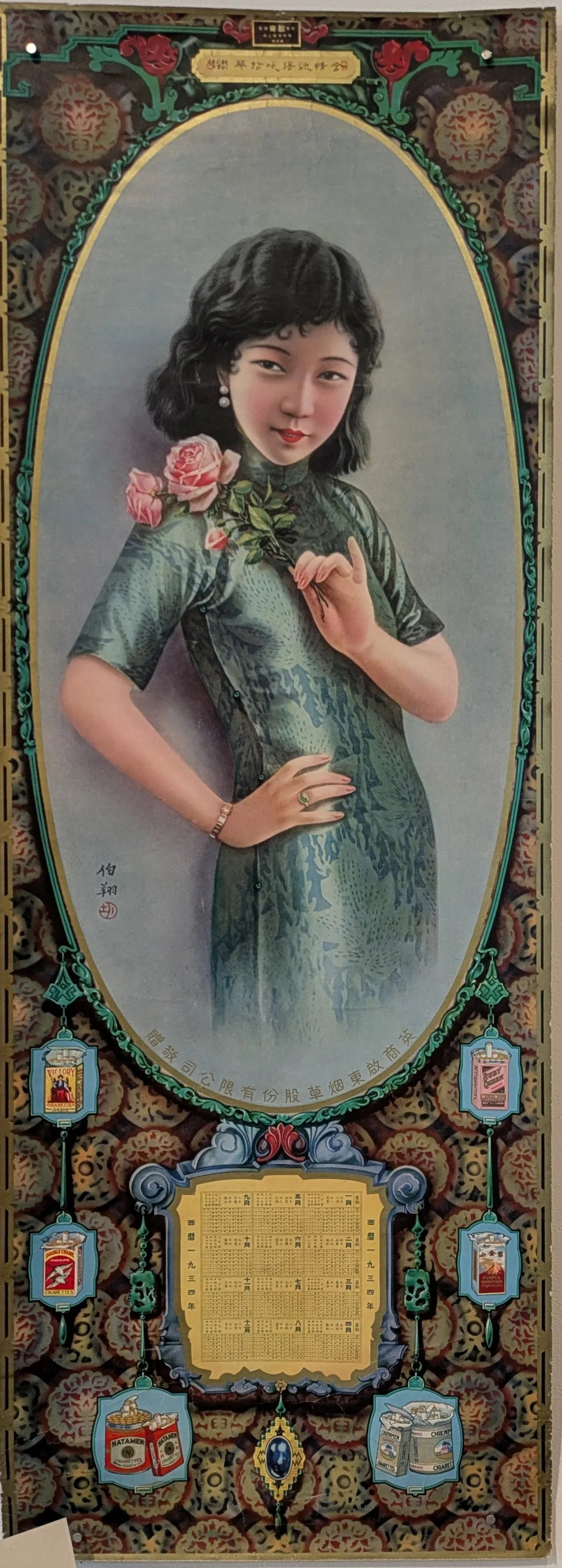
A second calendar. It's shaped like a mirror, but instead you're seeing an image of a glamorous woman. Something for the members of the household to aspire to, my friend explained.
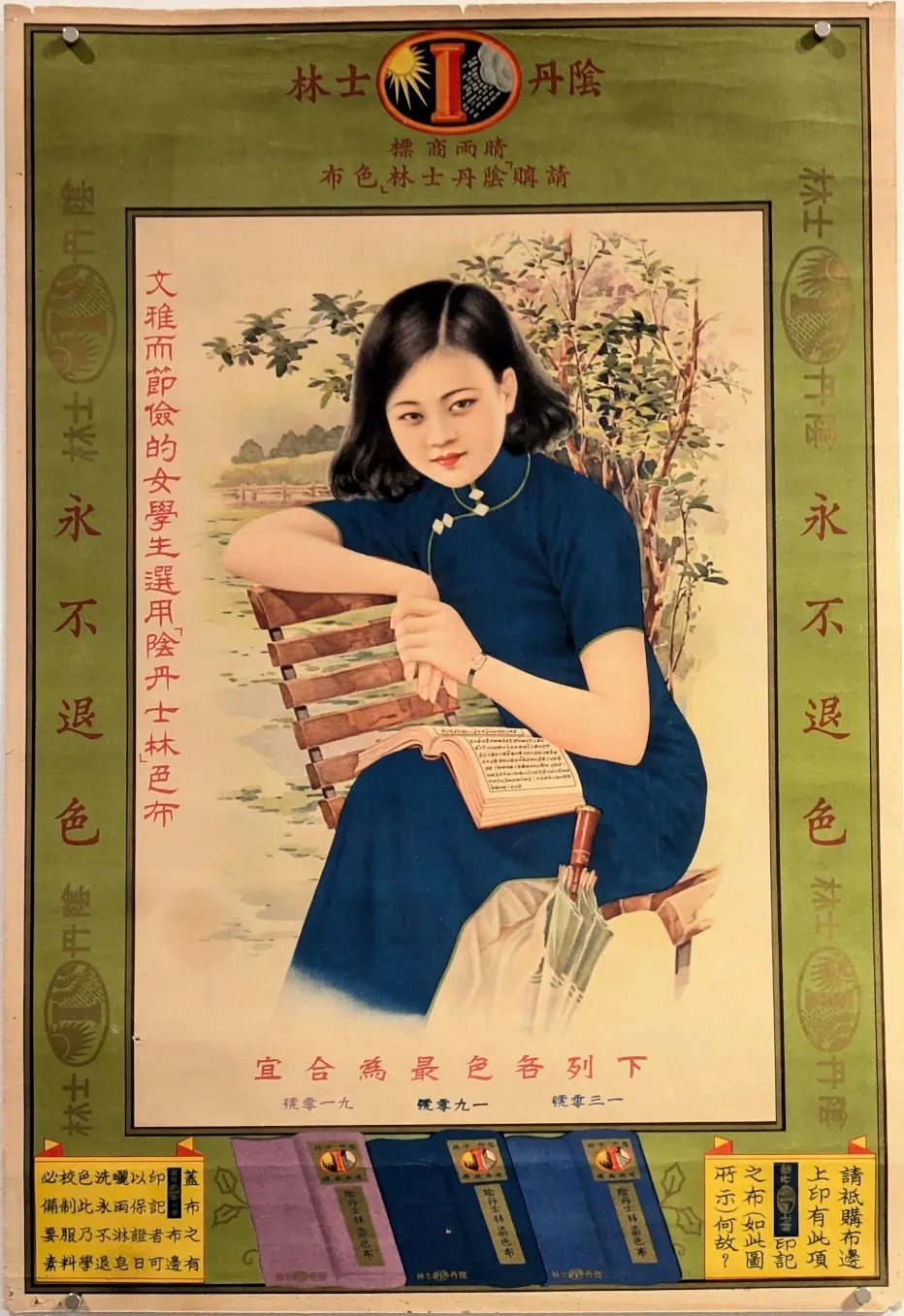
This poster was from a company that produced dyes. M translated the text in red as talking about the quality and durability of the color.
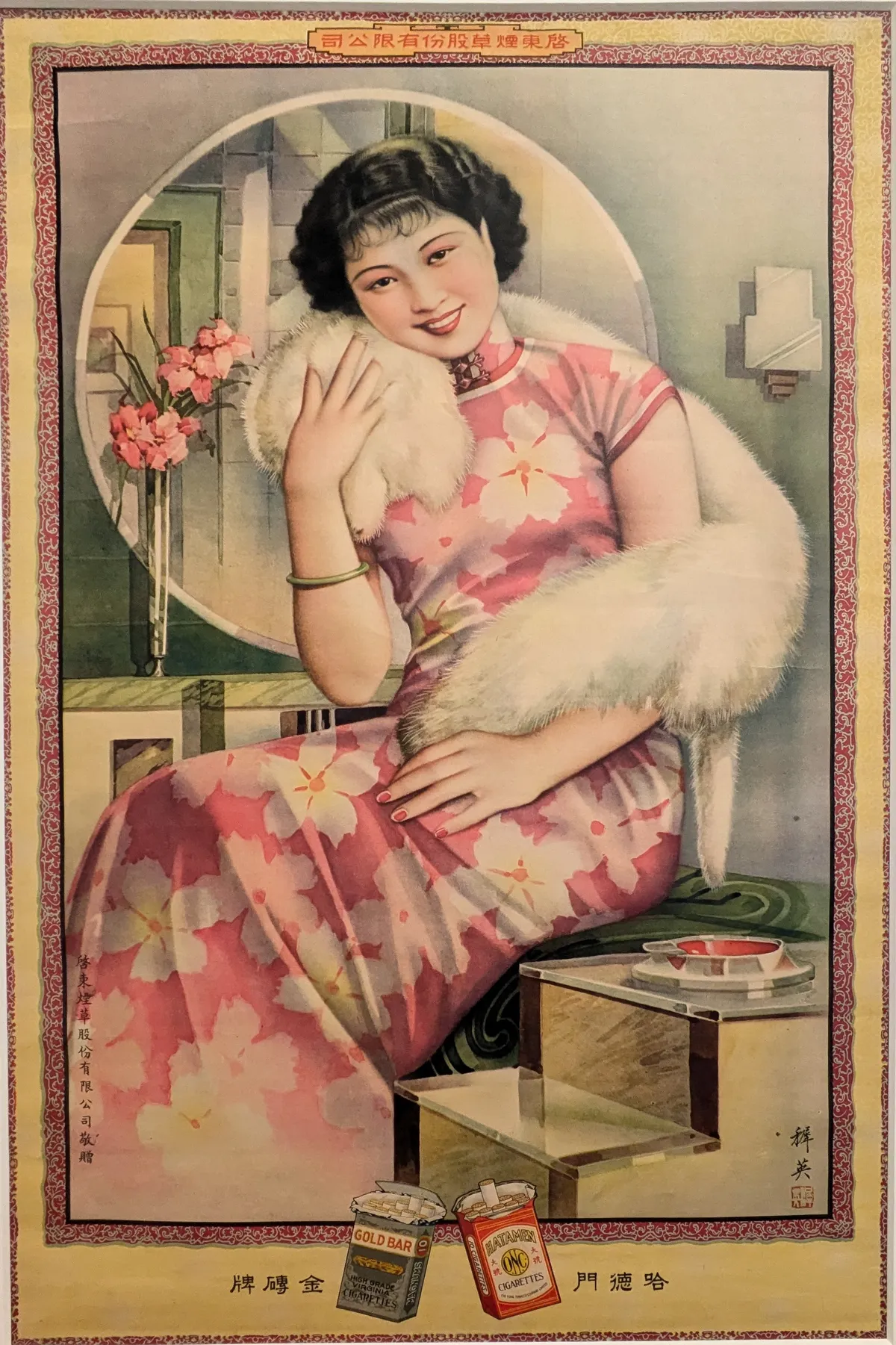
The models for these posters were often famous actresses. This one is advertising cigarettes.
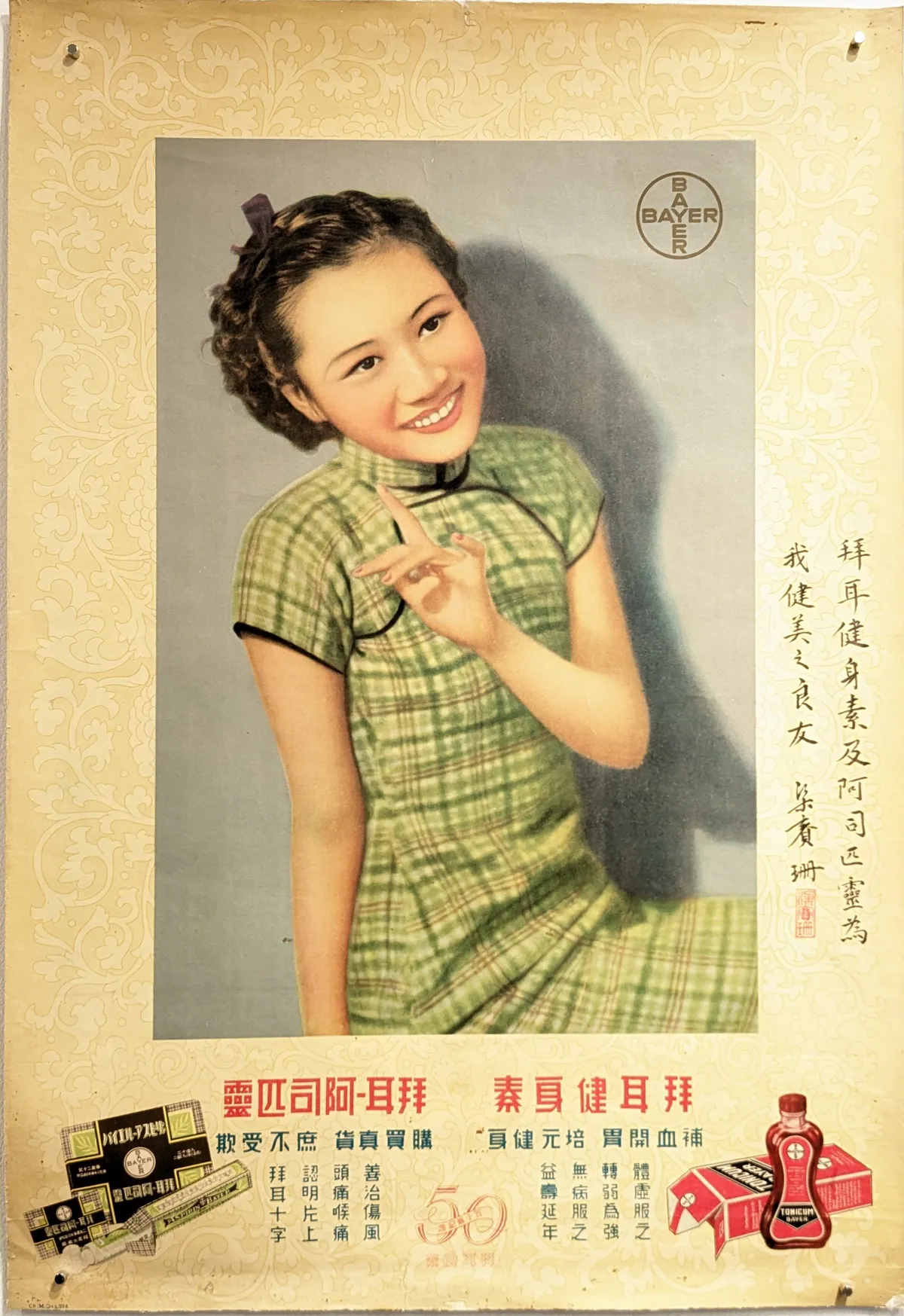
An advertisement for aspirin. (Interestingly, this company, Bayer, is still going strong today.) M noted that this is an example of Chinese-German economic collaboration in the 1920s.
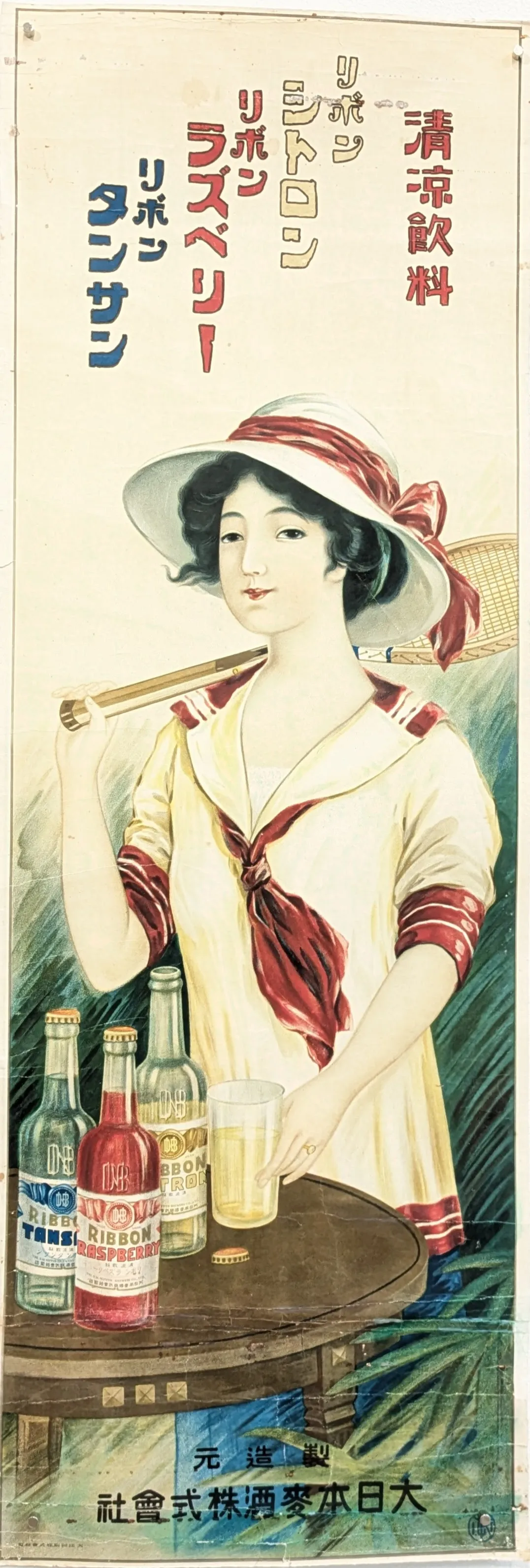
By default, all of the models in the posters wore a qipao. The sailor outfit here is probably to emphasize the company's Western-ness (although, M pointed out that sailor outfits like this were actually somewhat common attire for women playing tennis in the 1920s.)
They also noted that this is a Japanese company and that the poster is bilingual in Japanese and Chinese.
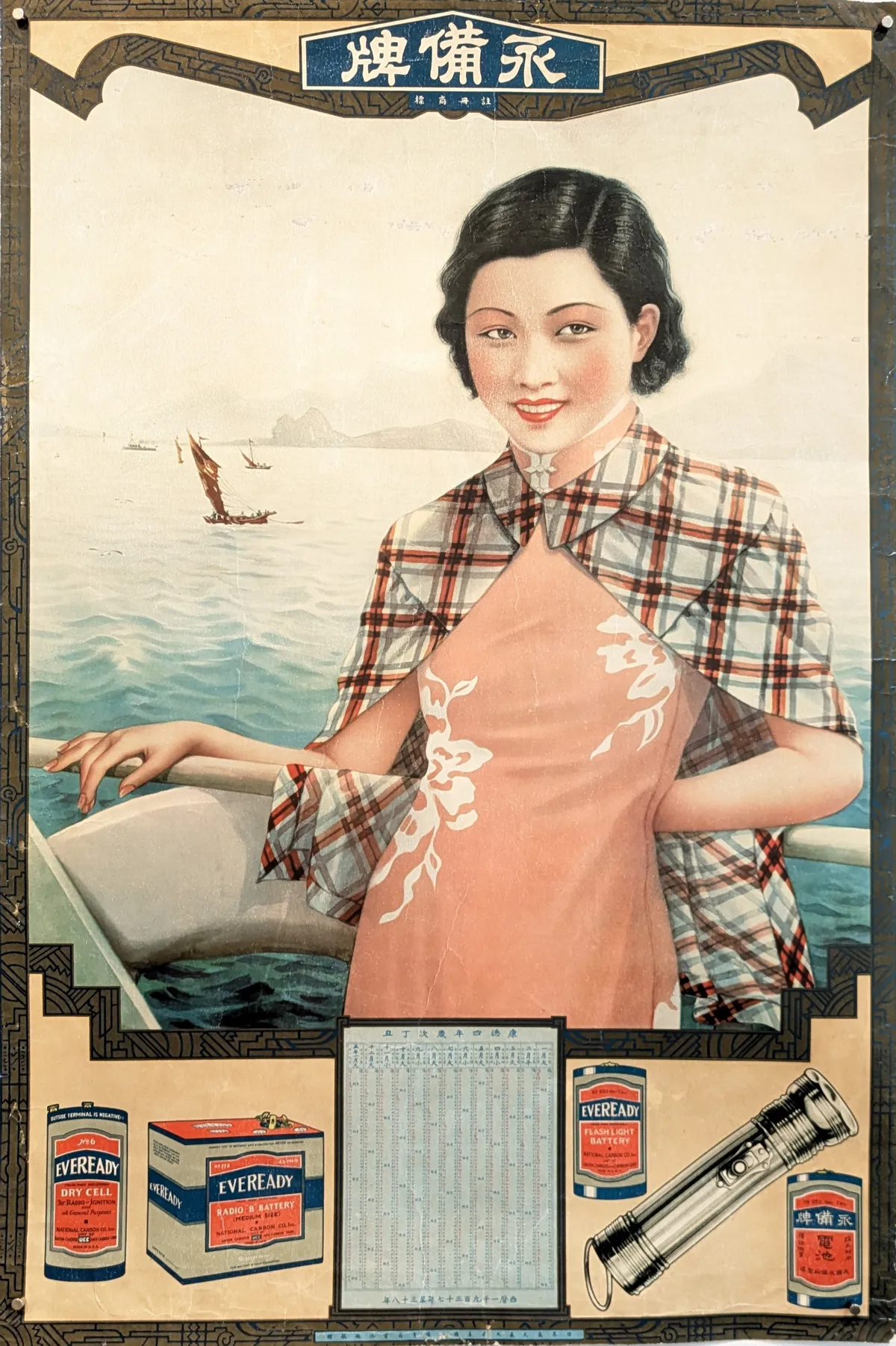
An advertisement for Eveready batteries.
I tend to think of batteries as being more of a masculine product, because they're associated with electronics. But all of these advertisements seem like they're targeting women, which makes me wonder how much purchasing power these women had.
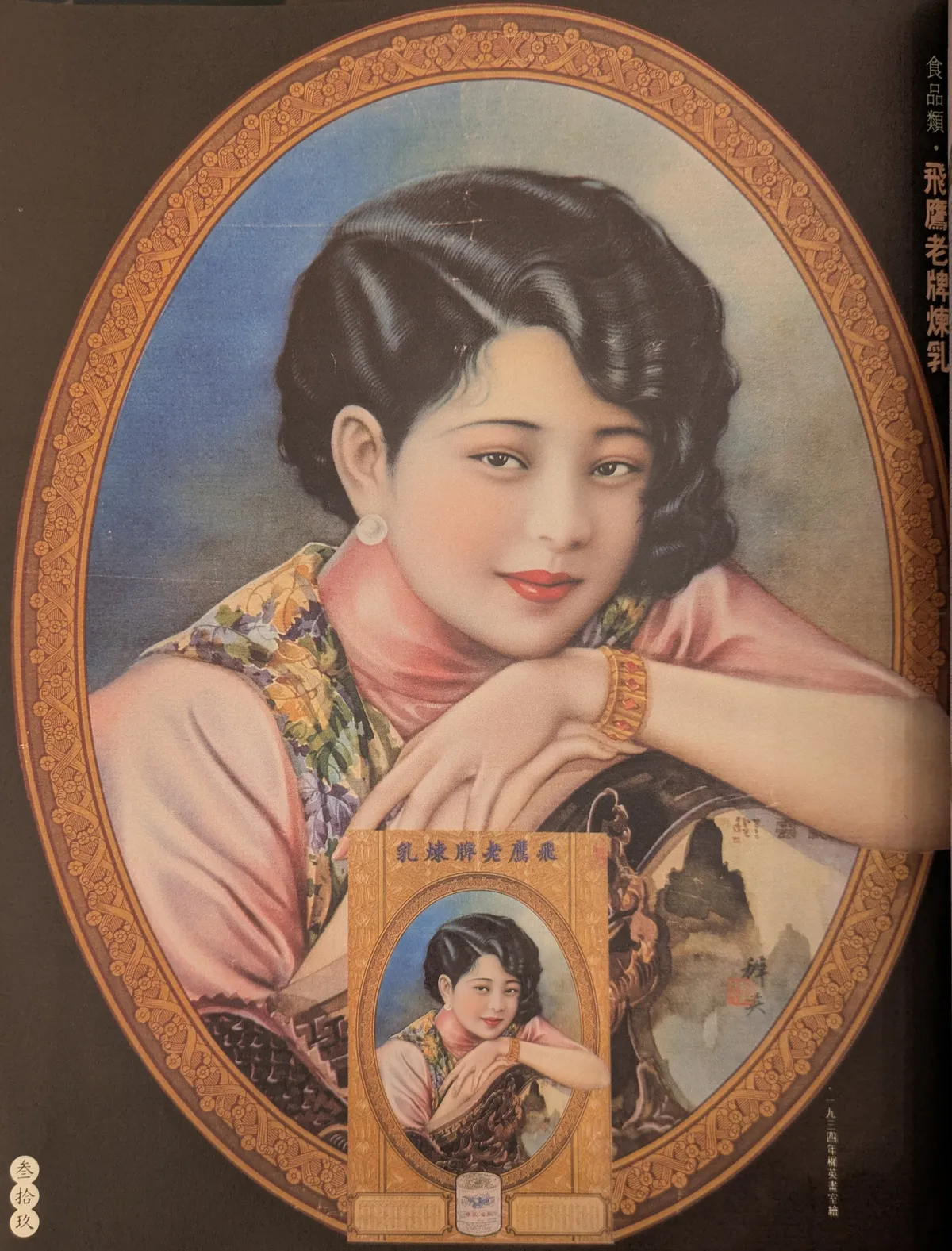
I'm not really sure what the object is that this woman is resting on. At first, I thought it was a viewing stone, also called gongshi. These were carefully selected rocks with interesting formations, which Chinese scholars would traditionally have on their desks to inspire them as they worked. Viewing stones would often have a base made of wood specially carved to fit the rock's exact dimensions.
But this looks more like it's an elaborately carved wooden frame for a piece of art. Which begs the question of why she's resting her arm on the art?
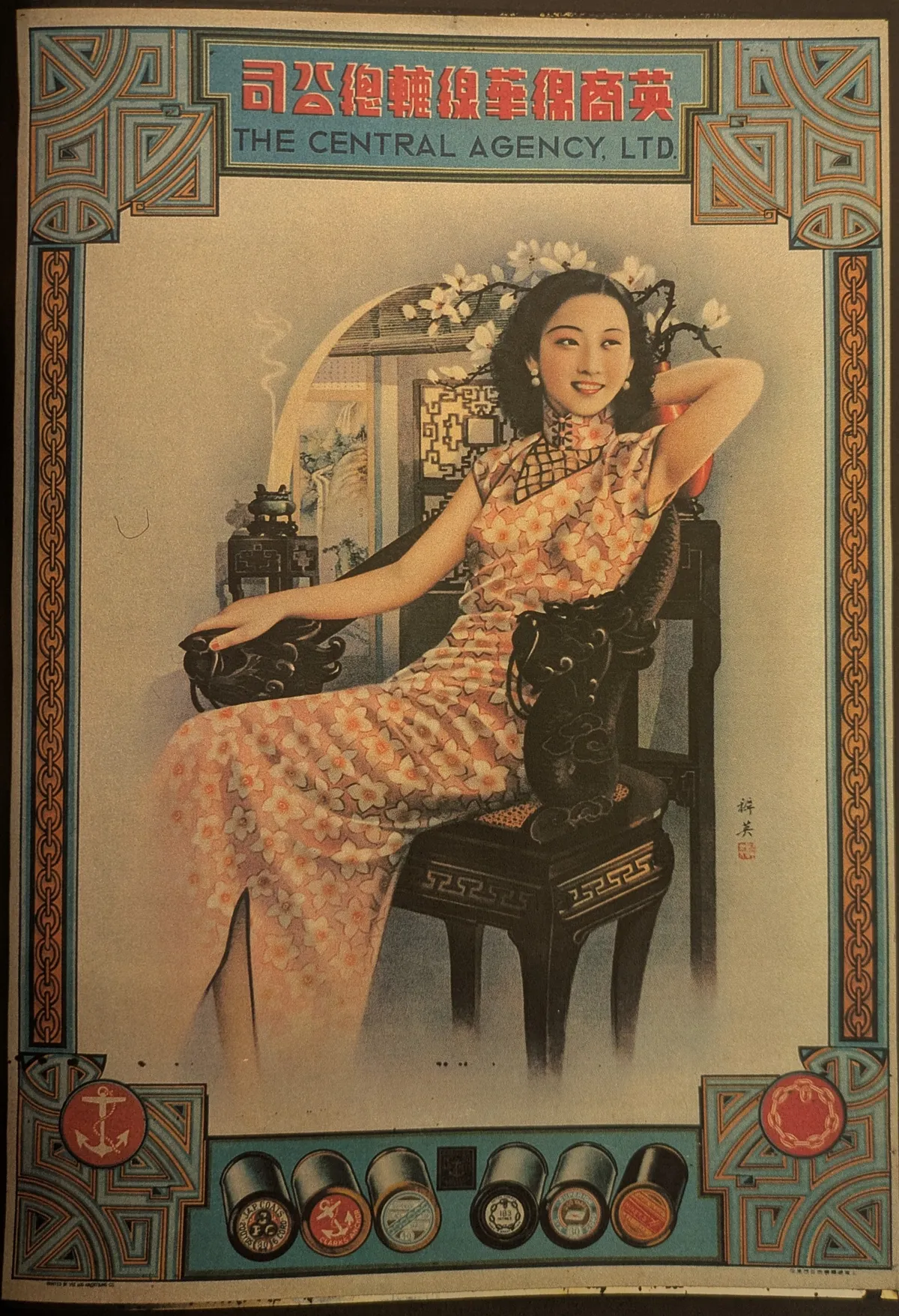
An advertisement for thread. Notice how incredibly elaborate the armrests are on the chairs.
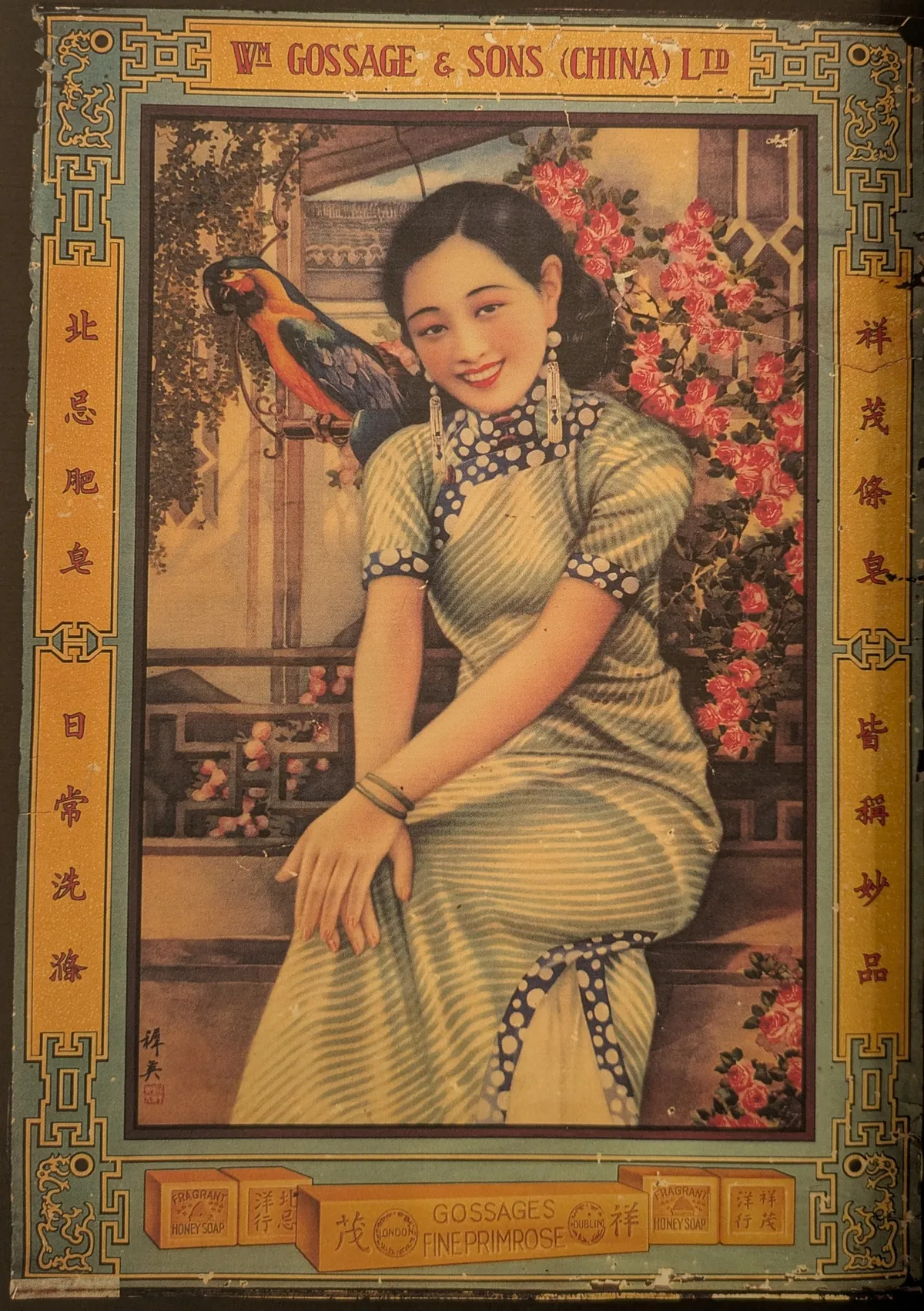
A parrot! It turns out there are a bunch of parrot species native to rainforests in Southeast Asia, many of which were introduced to China as pets. I hadn't known this.
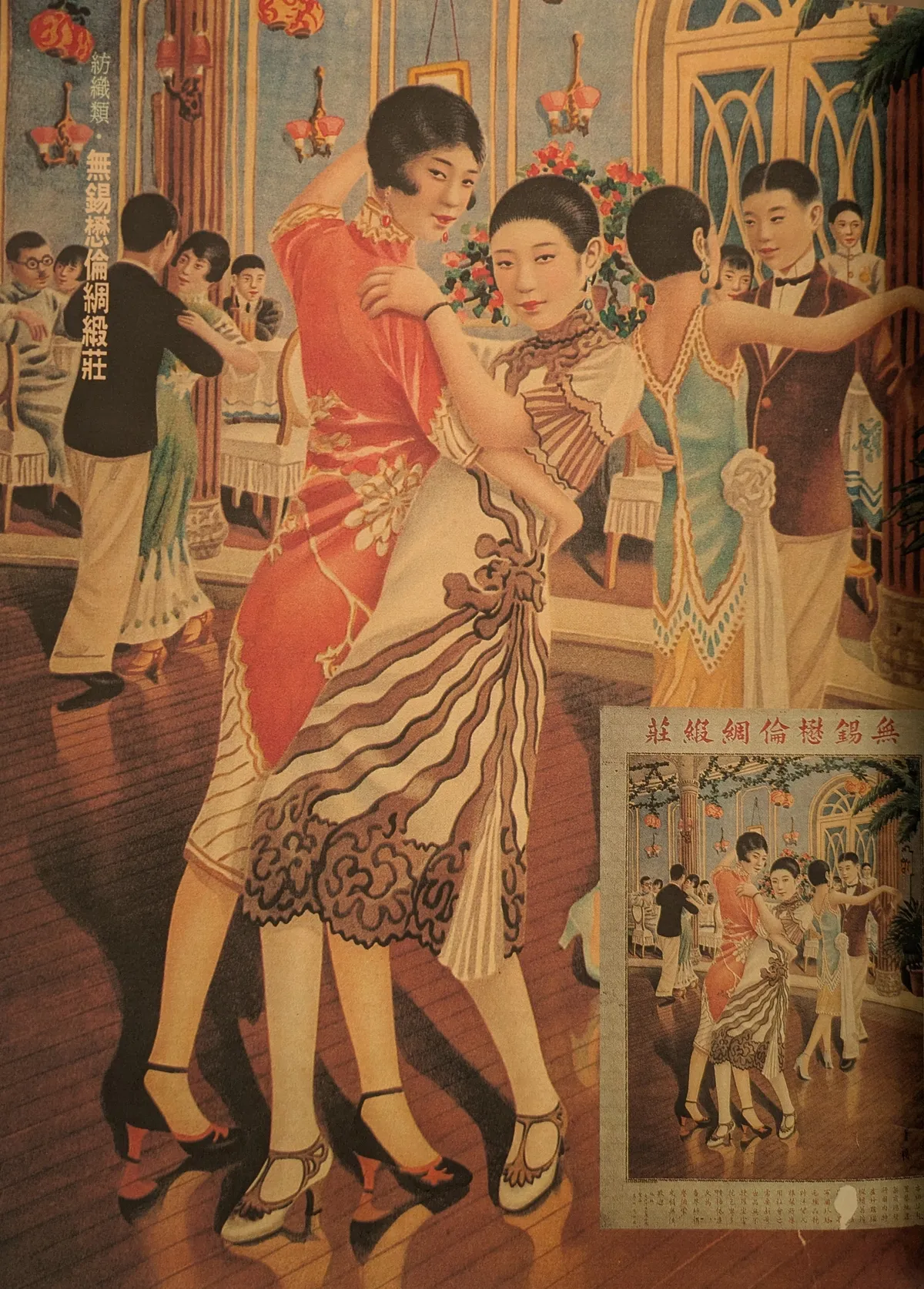
Two women dancing.
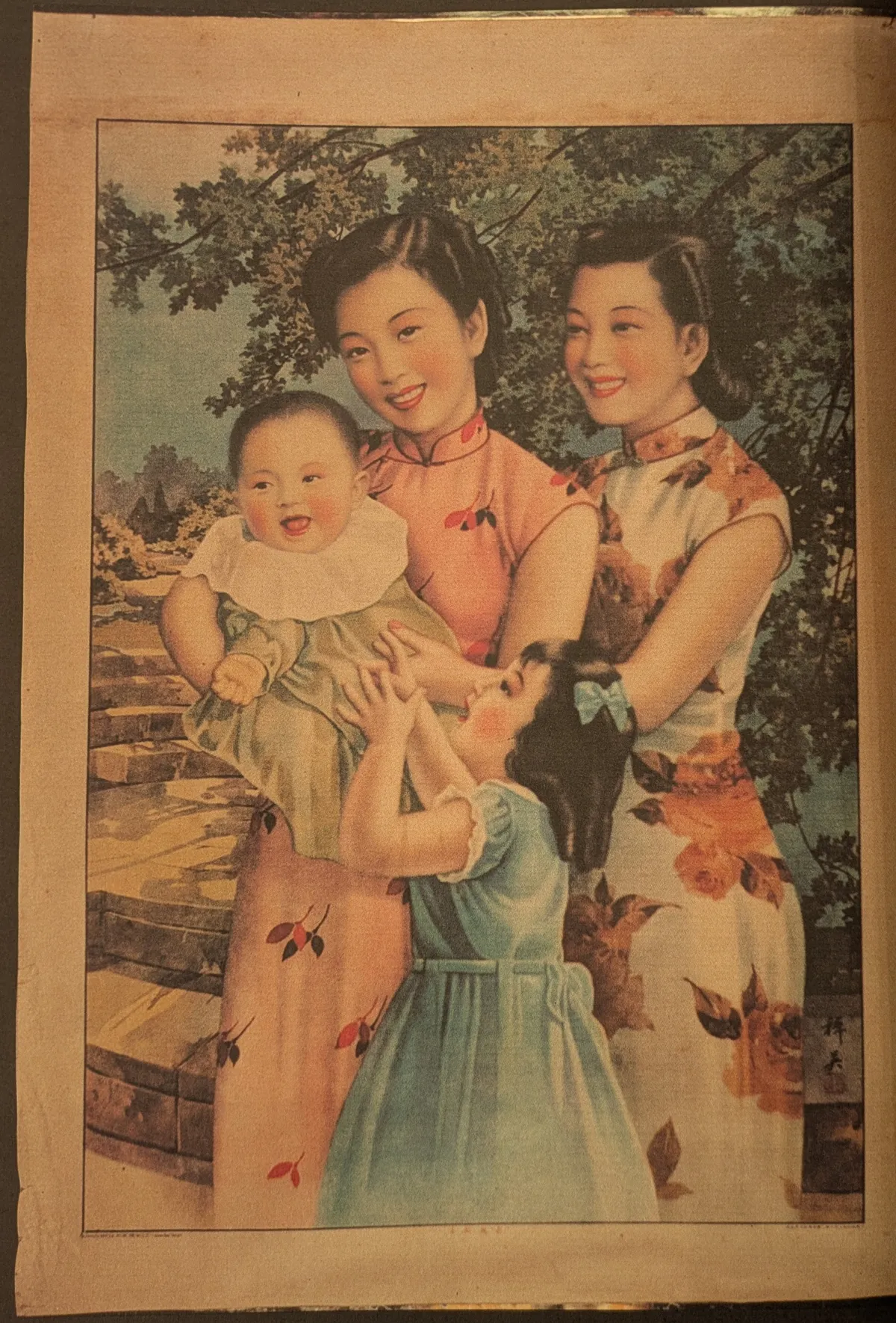
Another lithograph print. Together with the previous image, it makes me wonder what family structures looked like in China in this period. Are the two women sisters? Friends? Something more? Are they raising the two children together, or merely posing for this photo? Unfortunately, no context was given.
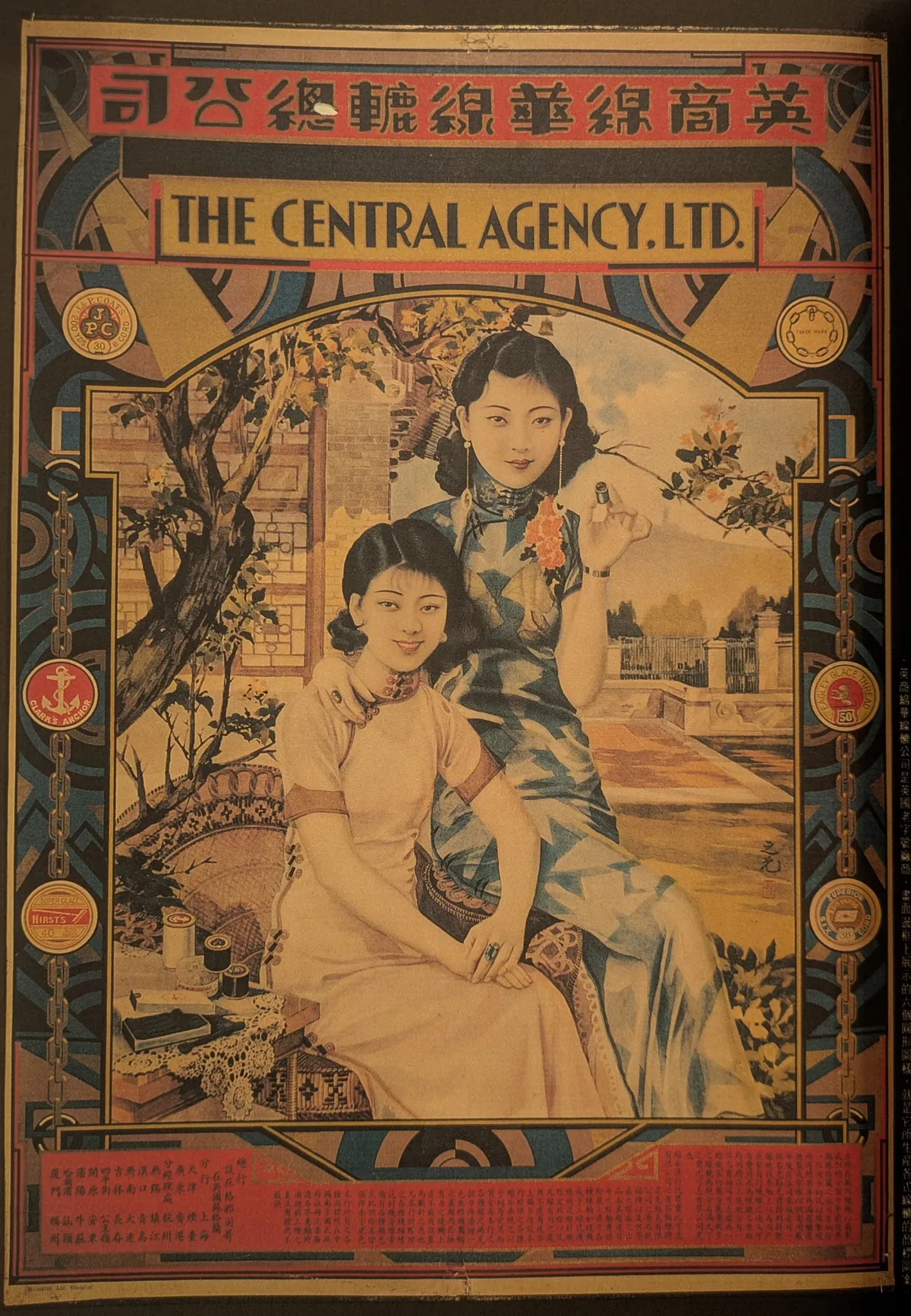
Another calendar.
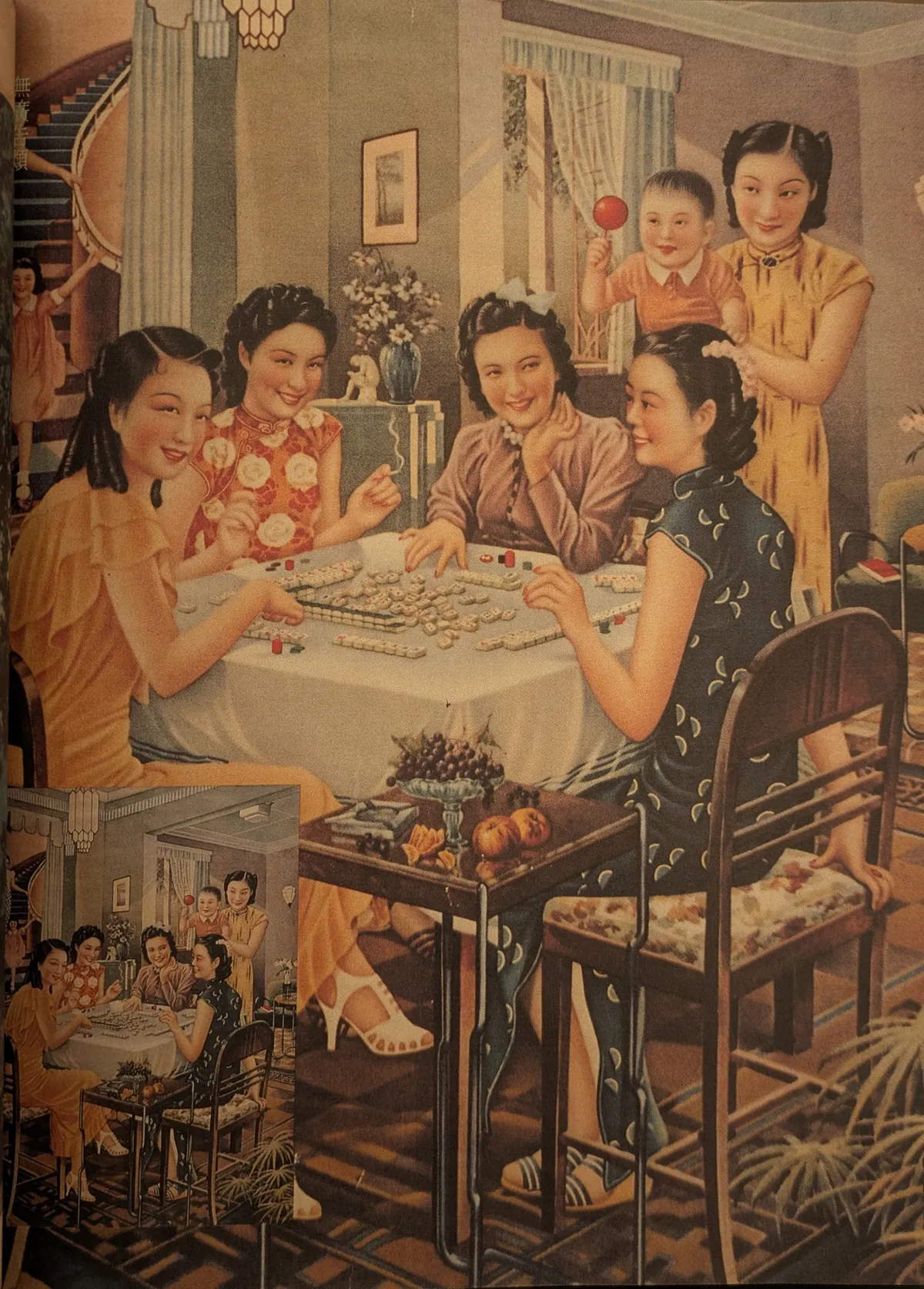
A game of mah jongg. Lots of blending of European and Chinese cultural elements in this illustration, from the hair bow and children's clothing to the style of the stairs.
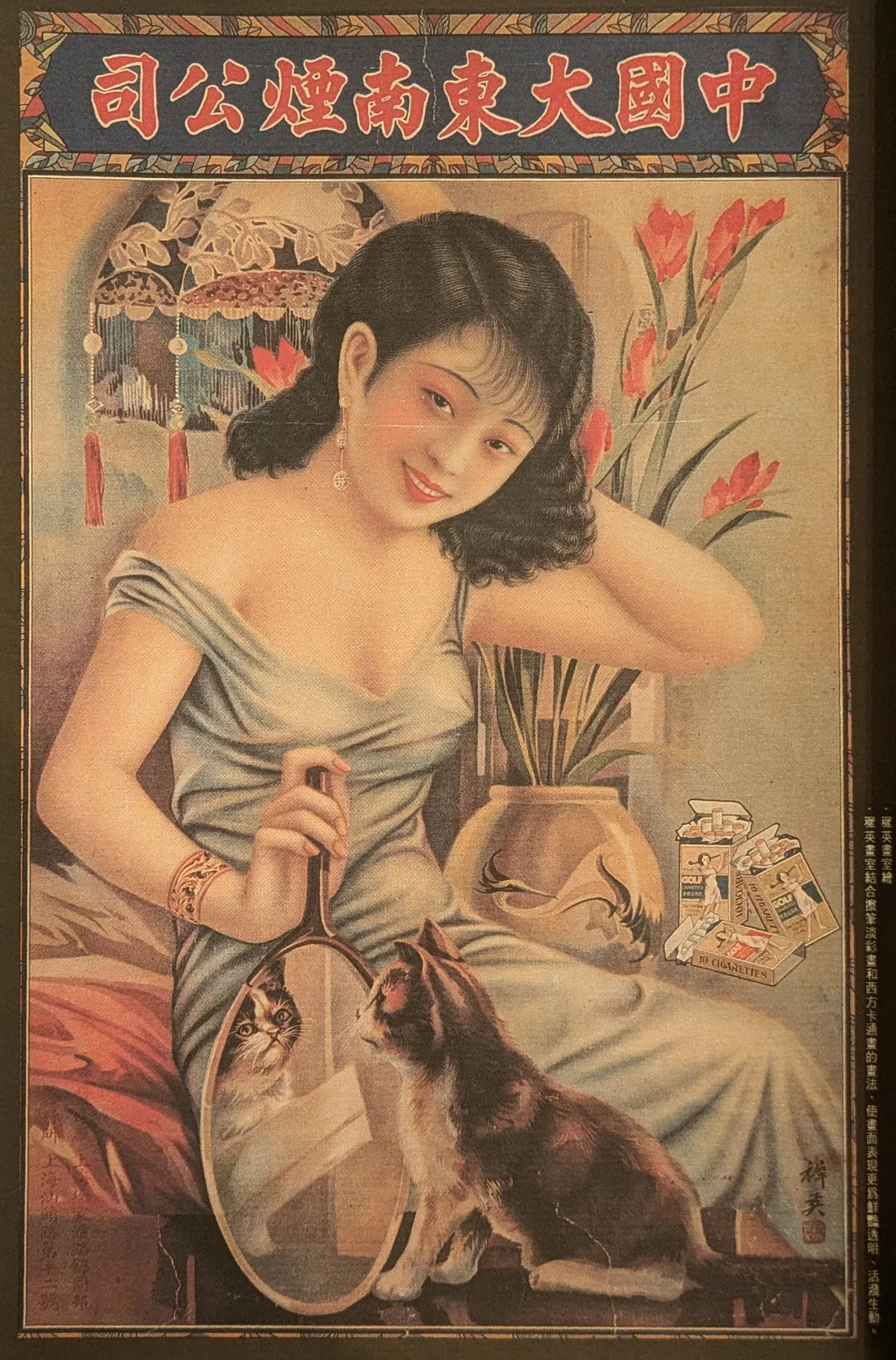
A woman in a Western-style nightgown.